
A windshield can look clean from the driver’s seat until sunlight hits it at the wrong angle. Then every smear, haze mark, and fingerprint becomes obvious. The best windshield cleaning tool is usually not a bottle of glass cleaner by itself. It is a tool that lets you reach the entire windshield, lift oily film instead of spreading it around, and leave the glass clear without straining your wrist.
For most vehicle owners, the most useful choice is a microfiber windshield cleaning wand with a washable, low-pile microfiber bonnet. It gives you the reach needed for the lower inside corners of the glass, where regular towels tend to miss, while keeping your hand off the freshly cleaned surface. Still, the right tool depends on whether you are dealing with interior film, exterior grime, a tall windshield, or occasional touch-ups.
What Makes the Best Windshield Cleaning Tool?
A good windshield tool needs to solve a practical access problem. The inside of a windshield is angled away from you, squeezed between the dashboard and glass, and often harder to clean than the exterior. Trying to force a folded towel into that space can leave streaks, skipped corners, and sore shoulders.
The best tools pair a flat cleaning head with enough reach to cover the glass evenly. A pivoting head is especially helpful because it stays flatter against the windshield as you move from the top to the bottom. The cleaning pad matters just as much. Choose a clean microfiber pad with a short or medium pile rather than a fluffy towel. Thick towels can hold too much product and leave lint or uneven moisture behind.
Look for a tool with a removable, machine-washable pad. Disposable pads may be convenient, but they cost more over time and are more likely to create waste. A washable microfiber cover lets you maintain a dedicated set of pads for automotive glass, preventing wax, dashboard dressing, or grease from contaminating the windshield.
The Best Tool for Most Car Owners: A Microfiber Cleaning Wand
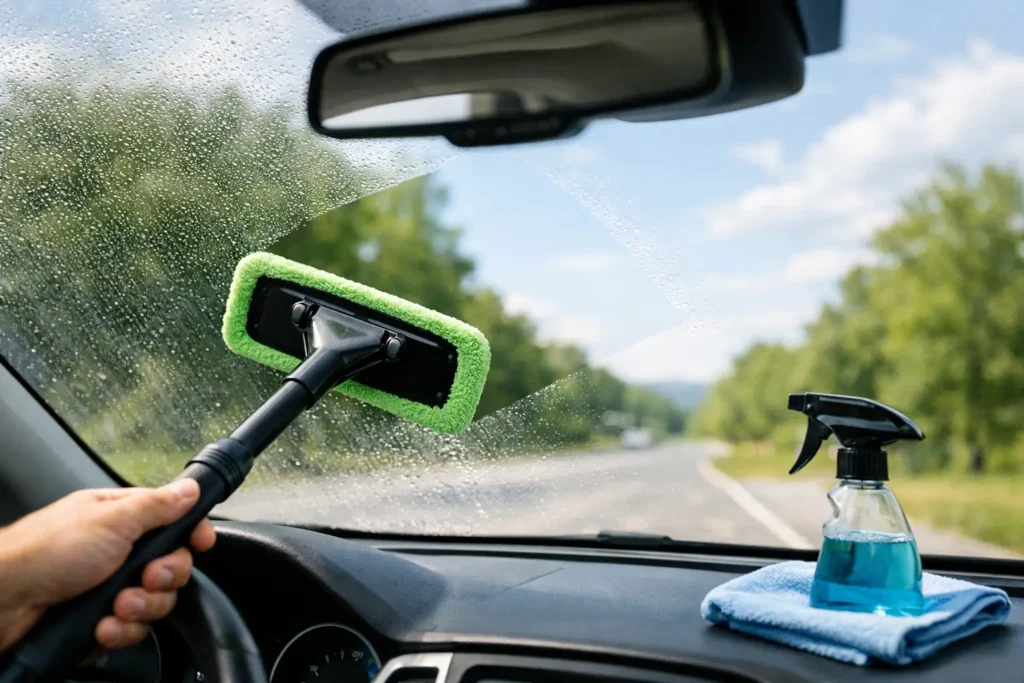
A windshield cleaning wand is the best all-around option for routine interior and exterior glass care. Most have a rectangular head, an extendable or fixed handle, and one or more microfiber covers. The design makes the tool more effective than a towel alone for the wide, sloped glass found in sedans, SUVs, trucks, and minivans.
Use the wand primarily for the inside of the windshield. This is where it delivers the biggest advantage, especially at the base of the glass near the defroster vents. That area collects dust, vapor residue, and the film created by interior plastics. Smokers, pet owners, rideshare drivers, and anyone who uses interior protectants may notice this haze more quickly.
A compact wand with a six- to 10-inch cleaning head works well for most cars. Larger heads cover more area but can be awkward around rearview mirrors, dashboard contours, and narrow windshield corners. If your vehicle has a very steep or deep windshield, such as a full-size truck or large SUV, an extendable handle can make the job easier. For a small coupe or sedan, a shorter handle generally provides better control.
When a Microfiber Towel Is the Better Choice
A windshield wand is not necessary for every job. For a quick exterior wipe-down, a quality microfiber towel is often faster and gives you more control around wiper arms, windshield edges, and bug splatter. Keep several clean towels on hand, because glass cleaning works best when you use one towel for washing and another dry towel for final buffing.
Towels are also better for spot-cleaning. If a bird dropping, tree sap spot, or handprint appears on the outside of the windshield, there is no need to set up a reach tool. Apply the appropriate cleaner or water-based pre-soak, lift the contamination gently, and dry the area with a fresh towel.
The trade-off is access. A towel cannot reliably clean the lower interior windshield without your hand pressing against the glass or your arm working at an uncomfortable angle. For full interior cleaning, the wand remains the more practical tool.
Avoid These Common Windshield Cleaning Mistakes
The tool alone will not prevent streaks. Most frustrating windshield results come from contamination, too much product, or cleaning glass in poor conditions.
First, do not use the same towel you use for paint, wheels, or interior dressing. Even a towel that looks clean may hold road grime, tire dressing, wax, or silicone residue. Those products can smear across glass and create glare at night. Designate microfiber towels and wand covers for glass only.
Second, use less cleaner than you think. Soaking the windshield usually creates more work, not better results. Lightly mist the microfiber pad or towel instead of spraying the glass heavily. This approach reduces overspray on the dash, headliner, and electronics while giving you better control over the product.
Third, avoid cleaning hot glass in direct sun when possible. Cleaner can flash-dry before you have time to wipe it away, leaving visible streaks. Park in shade, work in a garage, or clean early in the morning or later in the day.
Finally, do not rely on household paper towels. They can leave lint, break down when wet, and may not remove oily film effectively. Some paper products are also rough enough to be a poor choice for tinted window film or delicate interior surfaces near the glass.
How to Clean the Inside of a Windshield Without Streaks
Start by folding or fitting a clean, dry microfiber pad onto your windshield wand. If the glass has visible dust, make a dry pass first. Removing loose dust before adding cleaner keeps it from turning into a muddy residue.
Next, lightly mist the pad with an automotive glass cleaner. An ammonia-free formula is the safer choice if your vehicle has tinted windows or you are unsure about the type of tint installed. You can also use a small amount of water for light maintenance, but a dedicated glass cleaner is more effective against oily interior film.
Work in overlapping passes, beginning at one upper corner and moving across the windshield. Keep the head of the wand flat against the glass. Do not scrub aggressively. Moderate pressure and consistent passes are more effective than pushing hard on the handle.
Before the cleaner dries, switch to a second clean, dry microfiber pad and repeat the overlapping passes. This final buffing step is what removes the remaining moisture and reveals missed streaks. If you see a haze when looking through the windshield from outside, the glass may still have product residue. Make one more dry pass with a fresh pad rather than adding more cleaner.
Exterior Windshield Tools for Bugs, Film, and Road Grime
Exterior glass has different challenges. Road film, bug residue, pollen, and mineral spots often need more than standard glass cleaner. A microfiber towel or wash mitt is usually the first tool to use during a normal car wash. Clean the windshield along with the rest of the vehicle before reaching for a glass-specific product.
For stubborn bugs, soften the residue first with water or a bug-removal product made for automotive surfaces. Then wipe with a microfiber towel or a dedicated bug sponge designed for clear coat and glass. Avoid kitchen scouring pads, razor blades, or abrasive scrubbers unless you fully understand their risks. A razor can be used by experienced detailers on certain untreated exterior glass, but it can damage coatings, scratch glass under the wrong conditions, and should never be used on tinted glass.
If water spots remain after washing, a glass polish or water-spot remover may be appropriate. These products can be effective, but they are not routine cleaners. Follow the product directions carefully and test a small area first, especially if your windshield has a protective coating.
Features Worth Paying For
When comparing windshield cleaning tools, focus on useful design features rather than extras. A swivel or pivoting head improves contact with angled glass. Multiple washable microfiber bonnets make it easier to separate wet cleaning pads from dry finishing pads. A sturdy handle prevents flexing when you apply light pressure, and an extendable handle is valuable for larger vehicles.
A storage pouch is convenient but not essential. More importantly, confirm that replacement pads are available or that the included pads are easy to wash and reuse. A good tool should last through many cleaning sessions, not become disposable once the first cover wears out.
For households with more than one vehicle, consider keeping one windshield wand, four to six glass-only microfiber towels, and several replacement pads in a small car-care bin. That simple setup covers routine cleaning, interior haze, and unexpected exterior messes without requiring a cabinet full of specialty products.
Clear glass is a safety issue as much as a cosmetic one. A clean windshield reduces glare, improves visibility in rain and low sun, and makes every drive more comfortable. Choose a washable microfiber wand for full interior cleaning, keep dedicated towels for quick exterior jobs, and make windshield care part of your regular vehicle routine.