
A bottle that says “all-purpose” can be useful around the house and completely wrong for your dashboard. The cabin combines plastic, coated leather, fabric, clear instrument lenses, touchscreens, and carpet, often inches apart. Choosing cleaners safe for car interior surfaces protects those materials from fading, streaking, sticky residue, and premature wear while still getting the car genuinely clean.
For most owners, the best approach is not a cabinet full of specialty products. It is a small set of mild, material-appropriate cleaners used with the right towel, brush, and amount of moisture. Start gentle, clean one surface at a time, and save stronger products for problems that actually require them.
Why Interior Cleaner Choice Matters
Interior surfaces are not built like exterior paint. Plastic trim can discolor or develop a shiny, greasy look when harsh chemicals strip or coat it. Leather can dry out when repeatedly exposed to strong degreasers. Fabric seats may develop water rings if they are soaked, while headliners can sag when excess liquid weakens the adhesive behind them.
There is also a safety reason to be selective. Glossy dressings on a steering wheel, shifter, pedals, or dash can create glare or reduce grip. Ammonia-based glass cleaners may damage some tinted windows and can be risky around certain screen coatings. A clean interior should feel comfortable and look natural, not smell heavily perfumed or feel slick.
The safest product is not always the weakest one. A dedicated upholstery cleaner may be more effective and safer for a stained cloth seat than scrubbing it repeatedly with dish soap. What matters is matching the product to the surface and using only as much as needed.
Cleaners Safe for Car Interior Materials
A pH-balanced interior cleaner for most hard surfaces
A water-based, pH-balanced interior cleaner is the most practical starting point for dashboards, door panels, center consoles, vinyl, plastic trim, and rubber floor mats. Look for a product described as safe for interior plastics, vinyl, and rubber, preferably with a matte or low-sheen finish.
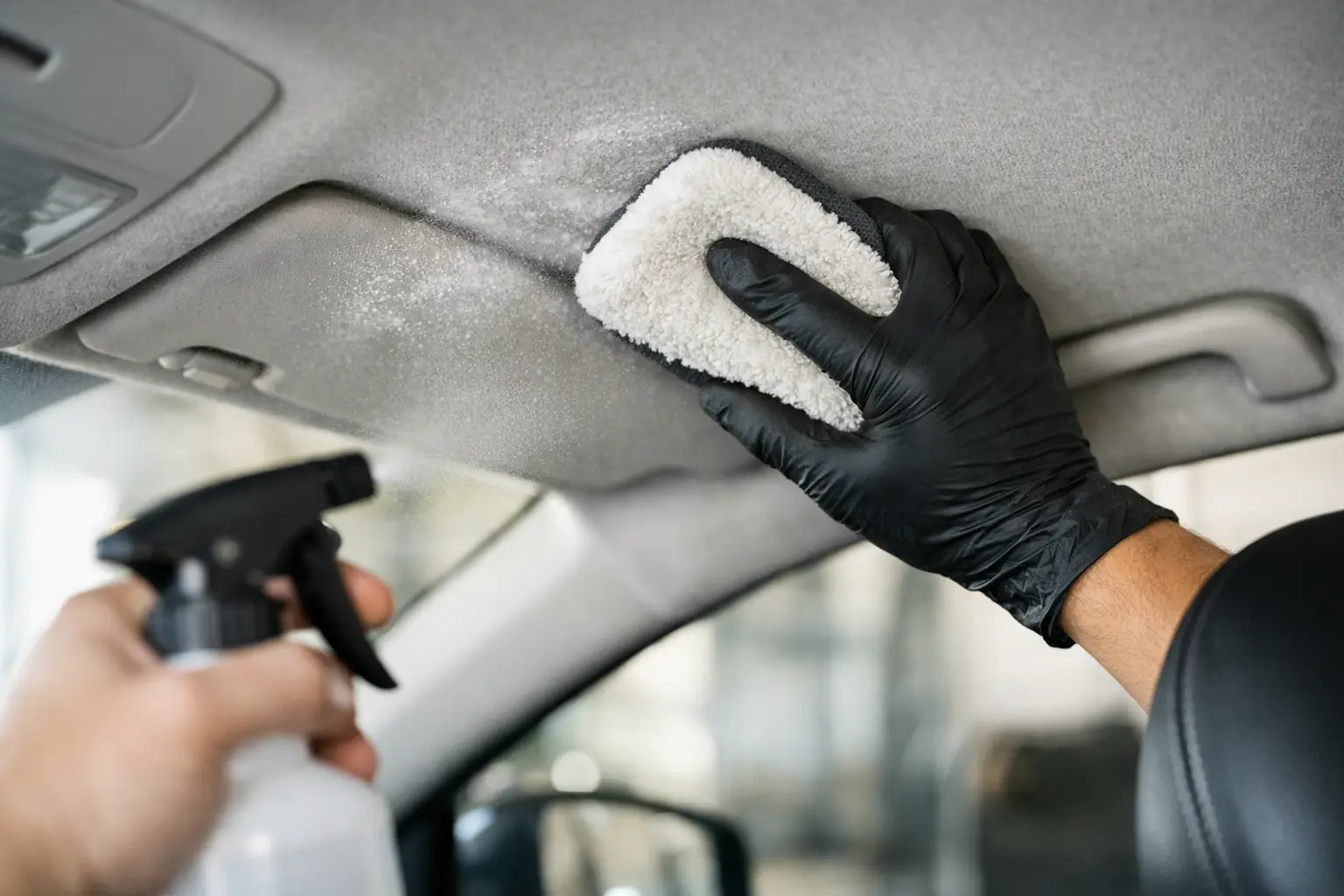
Spray the cleaner onto a microfiber towel instead of directly onto the dash. This keeps liquid out of vents, buttons, screen edges, and seams. Use a soft detailing brush only for textured plastic, then wipe again with a clean, dry microfiber towel.
Mild soap and water for light, routine soil
For light dust, fingerprints, and everyday grime, a few drops of mild dish soap mixed into a bowl or spray bottle of water can work well on durable plastic and vinyl. The key is dilution. The towel should be damp, not wet, and the surface should be dried immediately.
This simple solution is inexpensive and useful when you do not have a dedicated product. It is not the best choice for leather, screens, suede-like materials, or deep fabric stains. It can also leave residue if mixed too strongly, so use very little soap.
Dedicated fabric and upholstery cleaner
Cloth seats, carpet, and fabric door inserts need an upholstery cleaner formulated to lift dirt without saturating the material. Foam and low-moisture spray formulas are often easier for beginners because they make it less likely that you will soak the seat cushion or carpet backing.
Vacuum first. Dirt and sand become abrasive paste once cleaner is added, and they can work deeper into the fibers as you scrub. Apply cleaner according to the label, agitate lightly with an upholstery brush, then blot or wipe with a microfiber towel. Let the area dry with the windows cracked open when weather allows.
For an isolated stain, treat only the affected area first. For an older, heavily soiled seat, clean the full panel from seam to seam to reduce the chance of a visible clean spot or water ring.
Leather cleaner made for automotive leather
Most modern car leather is coated, which means it benefits from a gentle automotive leather cleaner rather than heavy oils or household furniture polish. Use a soft towel or soft leather brush, work in small sections, and wipe away the loosened grime.
If the leather feels dry after cleaning, apply a light automotive leather conditioner that leaves a non-greasy finish. Conditioning is helpful, but more is not better. Overapplying conditioner can leave seats slippery and attract dust. Avoid applying anything slick to a leather steering wheel.
Be cautious with perforated leather. Spray the towel, not the seat, so cleaner does not pool in the holes. If your vehicle has suede, Alcantara, or another synthetic suede trim, use a cleaner specifically intended for that material instead of standard leather products.
Screen-safe cleaner and a clean microfiber towel
Navigation screens, gauge cluster lenses, and digital climate displays are easily scratched. In many cases, a dry, clean microfiber towel removes dust and fingerprints without any product at all. For smudges, use a screen-safe cleaner or lightly dampen the towel with distilled water.
Do not spray directly on the display. Avoid paper towels, which can scratch clear plastic, and avoid ammonia cleaners unless the vehicle manufacturer specifically approves them. Gentle pressure matters as much as product choice because some displays have delicate anti-glare coatings.
Automotive glass cleaner for windows and mirrors
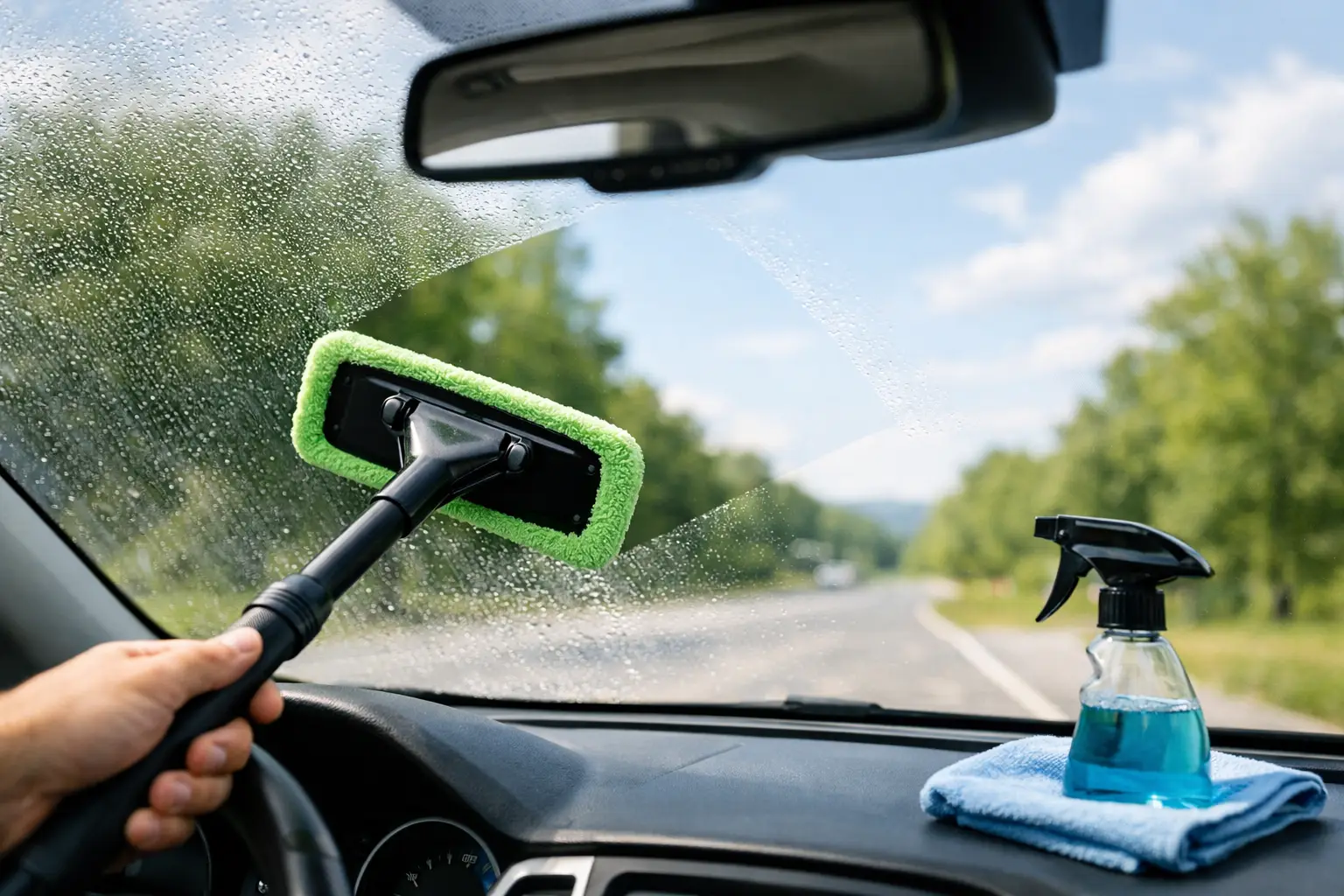
An ammonia-free automotive glass cleaner is a safe choice for interior windows, mirrors, and tinted glass. Use one microfiber towel to clean and a separate dry towel to buff. This two-towel method helps prevent streaks, especially on the inside of the windshield where film from dashboard materials and road grime can build up.
Keep glass cleaner off surrounding leather, fabric, and electronics. If it drips onto trim, wipe it quickly with a clean damp towel.
How to Use Interior Cleaners Without Causing Damage
Read the product label before you begin, even if the cleaner seems straightforward. Labels often identify surfaces to avoid and explain whether the product needs to be wiped, rinsed, or allowed to dwell briefly. When the surface is unfamiliar, test the cleaner on a hidden area such as the lower edge of a seat or under a floor mat.
Work from dry cleaning to wet cleaning. Remove trash, vacuum seats and carpet, and use a soft brush to loosen dust from creases before applying any liquid. That order limits muddy streaks and helps you see what actually needs cleaner.
Use microfiber towels in separate groups: one for hard surfaces, one for glass, and one for leather or upholstery. A towel that picked up greasy residue from a door jamb should not be used on a touchscreen. Wash towels without fabric softener, which can leave a residue that causes streaking.
Moisture control is the habit that prevents most DIY interior-cleaning mistakes. Apply product to the towel whenever possible, use small amounts, and dry each section as you go. This is especially important around seat controls, window switches, headliners, and stitched seams.
Products and Habits to Avoid
Bleach, strong degreasers, oven cleaner, and abrasive powders have no place in a normal car interior. They can stain fabric, dry out coated leather, discolor plastic, and leave harsh fumes in a closed cabin. Household disinfecting wipes may be acceptable for occasional spot cleaning on durable plastic, but frequent use can leave residue or dull certain finishes.
Avoid silicone-heavy dressings on controls, pedals, steering wheels, and glossy dash tops. They can make surfaces slippery and increase windshield glare. Also skip household furniture polish. It may make trim look shiny for a day, but that shine is often a film that attracts dust.
Steam can be effective in experienced hands, but it is not automatically safe. High heat and moisture can loosen headliner adhesive, affect electronics, and push moisture into seams. If you use a steam cleaner, keep it moving, use a low setting, and stay away from delicate displays and electronics.
A Simple Interior Cleaning Kit That Covers Most Jobs
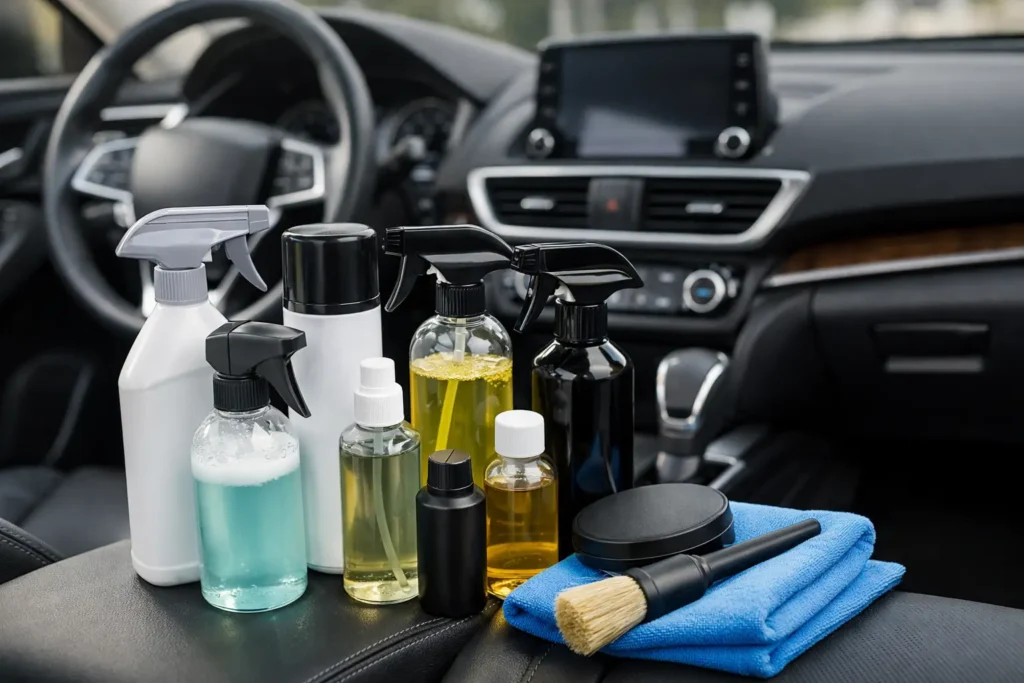
Most car owners can handle routine cleaning with a pH-balanced interior cleaner, an upholstery cleaner, an ammonia-free glass cleaner, a mild leather cleaner if the vehicle has leather, several microfiber towels, a soft brush, and a vacuum. Add a screen-safe product only if a dry microfiber towel and distilled water are not enough for your displays.
That kit covers the surfaces you touch every day without encouraging unnecessary product use. If a stain remains after a careful attempt, identify the stain before escalating to a stronger cleaner. Coffee, grease, pet accidents, ink, and dye transfer do not respond to the same chemistry.
A well-kept cabin does not need to smell like a cleaning aisle or shine like a showroom display. When you choose the right cleaner, use minimal moisture, and preserve the original finish, your car stays more comfortable now and more appealing when it is time to sell or trade it in.