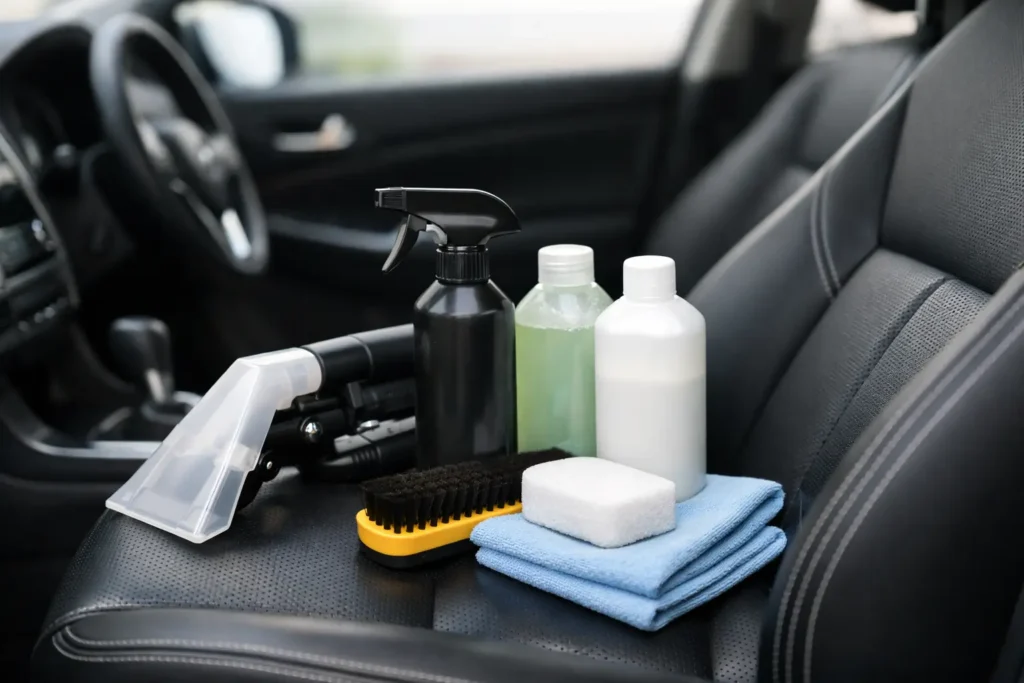

A coffee spill on the driver’s seat, muddy shoes in the back, and a faint smell that survives every air freshener are not the same problem. Treating them with one random spray can leave fabric stiff, create water rings, or make a leather seat look worse. The best car upholstery cleaners are the ones that match the material, the type of soil, and the amount of cleaning you are actually prepared to do.
For most owners, the goal is not a show-car interior. It is a clean, comfortable cabin that holds up to commuting, kids, pets, and everyday life. Choosing the right cleaner helps protect that interior while avoiding unnecessary trips to a detail shop.
Start by identifying your seat material
Before buying anything, check what you are cleaning. Modern car interiors can include woven cloth, synthetic suede, genuine leather, coated leather, vinyl, or a combination of several materials. A cleaner that works well on durable cloth may be too aggressive for leather, while a leather conditioner can leave an unwanted film on vinyl or plastic trim.
Cloth seats are the most forgiving, but they also absorb spills, body oils, and odor-causing moisture. They usually respond well to a dedicated fabric or upholstery cleaner. These products are often available as foaming sprays, liquid spot cleaners, or formulas designed for use with an extractor.
Leather requires a more careful approach. Most automotive leather has a protective coating, so it generally needs a mild leather cleaner rather than a harsh all-purpose degreaser. Follow with a non-greasy leather protectant if the product instructions recommend it. Avoid household cleaners, strong solvents, and heavy oils. They can dry out surfaces, leave slippery seats, or damage the finish over time.
Vinyl and synthetic leather are common in newer vehicles. They are easier to wipe clean, but they still benefit from a cleaner labeled safe for interior vinyl. Choose a finish that dries matte or satin rather than glossy. High-gloss dressings can reflect sunlight in the windshield and make seats feel slick.
Check a hidden area first
Even a product labeled for your material should be tested before you clean the whole seat. Apply a small amount beneath the seat, along a lower edge, or in another hidden spot. Check for discoloration, staining, texture changes, or dye transfer after it dries. This extra step is especially valuable on light-colored upholstery, older interiors, and aftermarket seat covers.
Match the cleaner to the mess
A general upholstery cleaner is useful for routine grime, but specific stains often need a more targeted approach. Using the wrong product can set a stain deeper or spread it across a larger area.
For fresh food, drink, or mud stains, blot first with a clean microfiber towel. Do not scrub immediately. Scrubbing drives the spill farther into the fibers and can fuzz up cloth upholstery. Once you have lifted as much moisture as possible, use a fabric-safe cleaner and work from the outer edge of the stain toward the center.
Greasy stains from fast food, sunscreen, cosmetics, or skin oils may need an upholstery cleaner with light degreasing ability. Use it sparingly and avoid soaking the seat. Old grease stains can require more than one treatment, particularly on light fabric.
For pet accidents, milk spills, or lingering organic odors, look for an enzyme-based cleaner. Enzymes are designed to break down the organic material causing the smell instead of simply covering it with fragrance. They need time to work, so follow the dwell-time instructions on the label. If the spill reached the seat foam or carpet padding, surface cleaning alone may not fully remove the odor.
Ink, dye transfer, and unknown stains are the situations where restraint pays off. Start with the mildest product that fits the material. Stronger cleaners are not automatically better, and aggressive scrubbing can remove color from fabric or damage a leather coating.
Spray, foam, or extractor: which option makes sense?
Car upholstery cleaners come in several forms, and each has a practical place in a home detailing routine.
A spray cleaner is the easiest choice for small stains and regular maintenance. Spray it onto a microfiber towel or soft upholstery brush rather than directly saturating the seat. This gives you more control, especially around stitching, seat controls, and perforated material.
Foaming cleaners are popular because the foam helps limit how much liquid reaches the seat cushion. They are a sensible option for cloth seats when you want to freshen an area without waiting all day for it to dry. Foam is not automatically stronger than liquid, though. The cleaning performance depends on the formula and your technique.
Liquid cleaners used with a carpet and upholstery extractor can provide the deepest results on heavily soiled cloth seats and carpet. An extractor sprays a controlled amount of solution and pulls dirty moisture back out. This is useful after a winter of slush, a season of hauling kids, or a major spill. The trade-off is cost, setup, and drying time. Overwetting the seat can lead to mildew or a musty smell, so use minimal solution and make enough drying time part of the plan.
Wipes are convenient for vinyl and leather touch-ups, but they are not a complete solution for embedded soil. They work best for quick maintenance between deeper cleanings.
A safe method for cleaning cloth seats
The product matters, but technique determines whether the seat looks clean when it dries. A little patience prevents the most common problems: residue, water marks, and damp cushions.
Start by vacuuming thoroughly. Use a crevice tool around seams and between the seatback and cushion. Dry dirt turns into mud when cleaner is applied, so vacuuming first makes every cleaner work better.
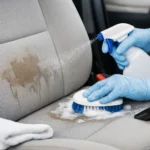
Apply a small amount of cleaner to a microfiber towel, upholstery brush, or the stained area as directed on the label. Agitate gently with a soft brush using short strokes. You want to lift soil from the fibers, not grind it deeper into the fabric. Wipe away loosened dirt with a clean, slightly damp microfiber towel, then blot with a dry towel.
If the seat still feels damp, leave the doors open in a dry, shaded area or run the vehicle’s fan with the windows cracked. Avoid parking in a closed garage immediately after wet cleaning. Good airflow matters more than blasting the seat with heat.
Do not soak the cushions
The most common DIY mistake is using too much cleaner. Seat fabric may look dry on the surface while the foam underneath remains wet. That trapped moisture can create odor, encourage mildew, and sometimes interfere with seat-mounted electronics. Use several light passes instead of one heavy application.
How to avoid residue and re-soiling
If a clean seat feels crunchy, looks streaky, or gets dirty again quickly, leftover product may be the issue. Cleaner residue can attract dust and make cloth feel stiff. It is usually caused by using too much product or skipping the final wipe-down.
After cleaning fabric, use a clean microfiber towel lightly dampened with water to remove remaining cleaner. Then blot dry. For leather and vinyl, wipe away excess product until the surface feels clean, not greasy. A properly cleaned seat should not look wet or shiny once it dries.
Fragrance is another consideration. A strong scent can make an interior feel freshly cleaned for a few hours, but it does not prove the upholstery is clean. If you are sensitive to fragrances, choose a low-odor formula and focus on removing the source of the smell instead.
When a DIY cleaner is not enough
Most stains are manageable at home, but some problems call for professional help. Consider a detailer if there is widespread mold, flood damage, a severe smoke odor, extensive dye transfer, or stains that have soaked deeply into foam. The same applies if a seat has ventilation, heating elements, occupancy sensors, or delicate perforated leather and you are not confident working around them.
Professional cleaning is also worthwhile before selling a vehicle with heavily soiled upholstery. A cleaner interior can improve buyer impressions, but do not expect one bottle to repair cracked leather, burned fabric, or permanently faded material. Cleaning preserves condition. It does not reverse every type of wear.
For routine care, vacuuming monthly and addressing spills promptly will do more for your seats than an occasional aggressive deep clean. Keep a microfiber towel and a material-safe cleaner in your car-care supplies, and use them before a small mess becomes a permanent part of the interior.