
Coffee splashes in the cup holder, salt marks on the carpet, sunscreen on the steering wheel, and a faint smell that never quite leaves are signs that a quick vacuum is no longer enough. So, what is car interior deep cleaning? It is a thorough, material-specific cleaning process that removes embedded dirt, stains, odors, and grime from the surfaces and hidden areas of your vehicle’s cabin.
Unlike a basic car wash cleanout, deep cleaning addresses the parts of the interior that collect buildup over time: seats, carpets, floor mats, door panels, vents, headliner, cup holders, seat tracks, dashboard seams, and more. Done correctly, it can make daily driving more comfortable, help preserve interior materials, and support better resale value.
What Is Car Interior Deep Cleaning, Exactly?
Car interior deep cleaning goes beyond picking up trash, wiping the dash, and running a vacuum over the floor. The goal is to clean the cabin at several levels: removing loose debris, breaking down stuck-on grime, treating stains, extracting dirt from fabric, and reducing odors at their source.
The process changes based on what is inside your vehicle. A cloth-seat commuter car may need shampooing or hot-water extraction on the seats and carpets. A vehicle with leather upholstery needs gentler cleaners and conditioning to avoid drying or discoloring the material. Rubber mats can handle more aggressive washing than delicate carpet mats, while a suede-like headliner requires very little moisture and almost no scrubbing.
A good deep clean is not about soaking every surface with cleaner. It is about using the least aggressive method that gets the material clean. That approach protects trim, electronics, adhesives, and upholstery while still producing noticeable results.
What a Deep Interior Cleaning Usually Includes
Most deep-cleaning jobs begin with a complete removal of trash and personal items. This matters because crumbs, receipts, pet hair, and loose change often hide underneath seats and in storage pockets. Once the cabin is empty, the cleaner can access areas that a routine cleanup misses.
The interior is then vacuumed carefully, including under the seats, between cushions, along seat rails, inside door pockets, and around the center console. A crevice tool and soft detailing brush are especially useful here. Brushing carpet fibers while vacuuming helps loosen sand, dried mud, and hair that have worked below the surface.
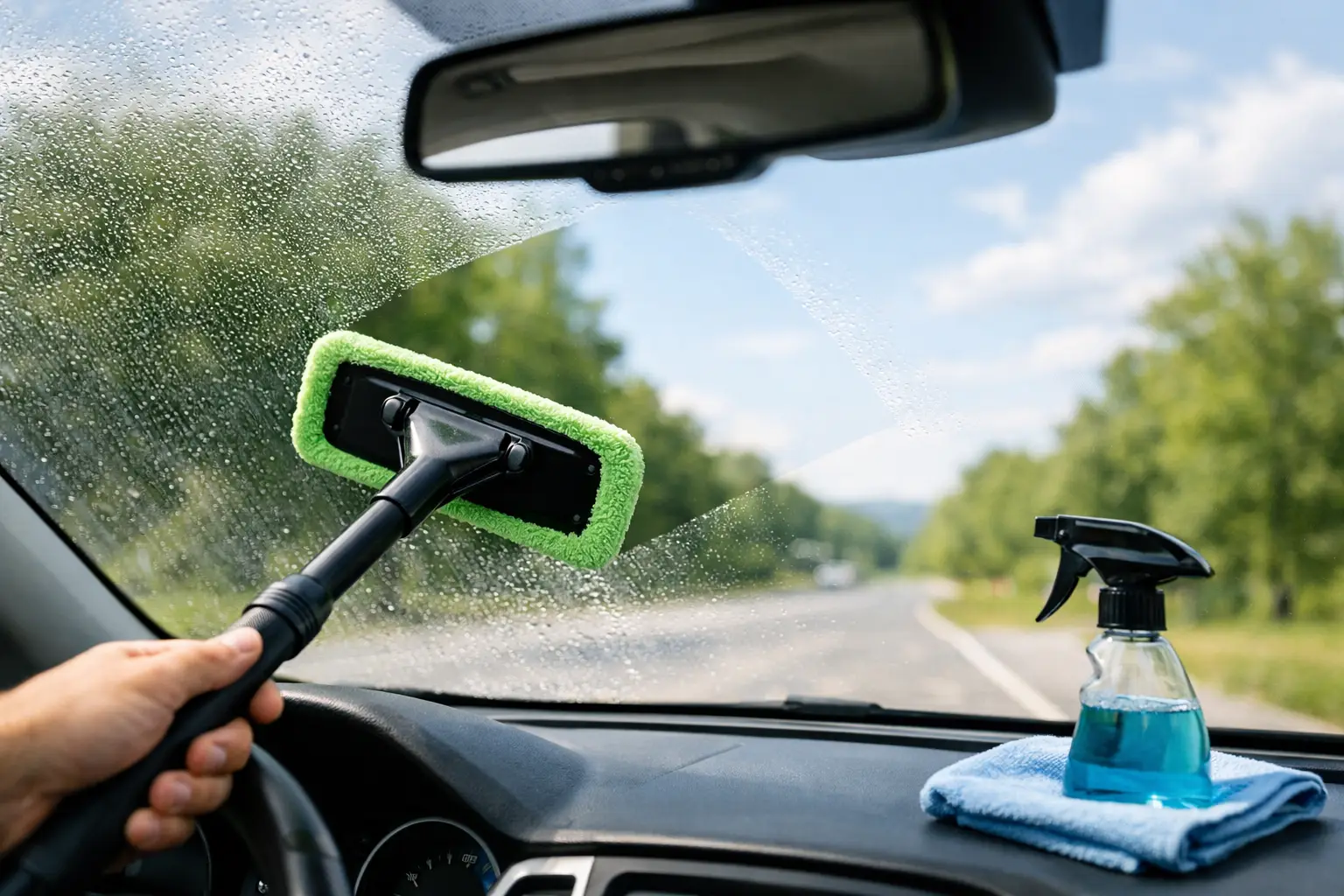
Hard surfaces such as the dashboard, door panels, console, steering wheel, shifter, and cup holders are cleaned with an interior-safe cleaner. Detailers typically use brushes, microfiber towels, and cotton swabs to reach buttons, seams, vents, and textured plastic. The steering wheel, door pull, and armrest deserve extra attention because they collect body oils, lotion, food residue, and germs from frequent contact.
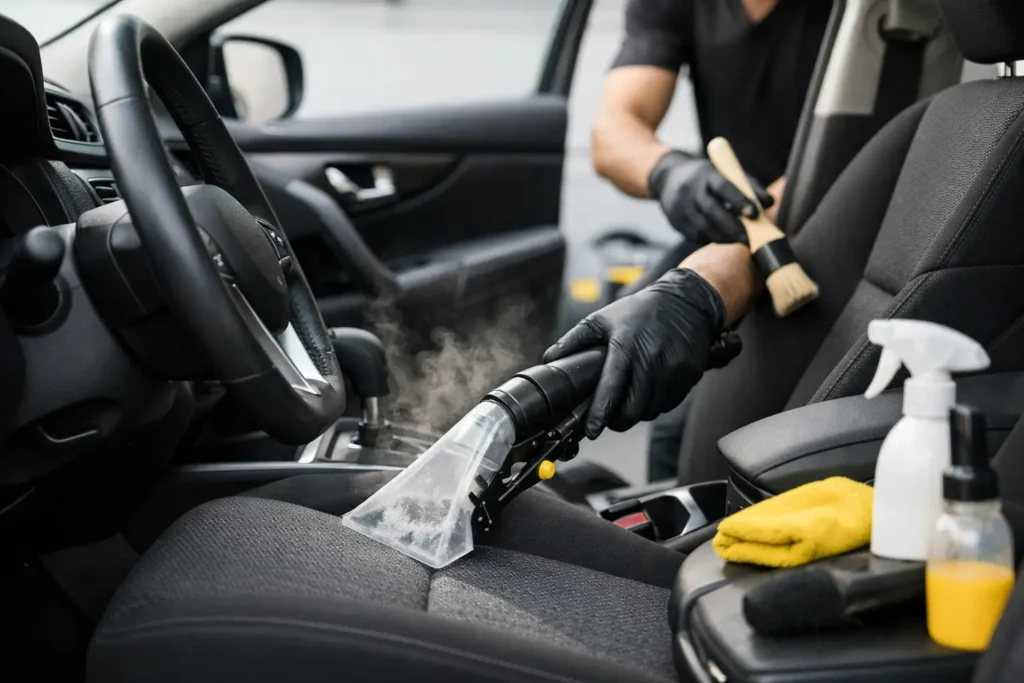
Fabric seats, carpeting, and cloth mats may be spot-treated, shampooed, or extracted. Extraction uses water and suction to lift dissolved soil from the fibers. It can be highly effective for dirty carpet, but it should be used with restraint. Oversaturating fabric can leave the interior damp for too long, create a musty smell, or encourage mold in humid conditions.
A deep clean also commonly includes interior glass, vent cleaning, odor treatment, and cleaning the trunk or cargo area. Odor treatment may involve removing the source, such as spilled milk, pet accidents, old food, or damp carpeting. Air freshener can improve the smell temporarily, but it cannot solve an odor that is still trapped in fabric or beneath the seats.
Deep Cleaning vs. a Regular Interior Clean
A regular interior clean is maintenance. It may involve a quick vacuum, wiping high-touch surfaces, cleaning the inside of the windshield, and shaking out the mats. If you keep up with those tasks weekly or monthly, your cabin will stay more presentable and deep cleaning will be easier when the time comes.
Deep cleaning is restoration. It takes longer because it involves detailed work, stain removal, material assessment, and drying time. A basic cleanup might take 20 to 30 minutes. A full DIY deep clean can take several hours, especially if your vehicle has heavily soiled carpet, kids’ spills, pet hair, or years of neglected buildup.
The difference is not simply how much product you use. A deep clean is more deliberate. You inspect surfaces, choose safe cleaners, work in sections, and avoid moving on until the dirt is actually removed or you have determined that the stain has permanently altered the material.
Why It Is Worth Doing
A clean interior affects more than appearance. Dust, allergens, food particles, and pet dander can build up in carpets and vents, particularly in vehicles used for commuting, school runs, or transporting pets. While detailing is not a replacement for professional health advice or HVAC repair, removing that buildup can make the cabin feel fresher and more pleasant.
Deep cleaning also helps you spot problems early. When you pull out floor mats and clean under the seats, you may find a water leak, loose trim, rust around a seat mount, damaged weather stripping, or a forgotten spill that could stain permanently. Routine attention gives you a better sense of your vehicle’s overall condition.
For owners planning to trade in or sell, interior condition can influence a buyer’s first impression. Worn materials cannot always be restored, but clean carpets, odor-free upholstery, clear glass, and cared-for trim make a vehicle look better maintained. A few hours of work may not transform the book value on its own, but it can help prevent avoidable deductions and make the car easier to market.
When Does Your Car Need an Interior Deep Clean?
There is no single schedule that fits every driver. A garage-kept car driven by one adult may only need a deep cleaning once or twice a year. A family SUV, rideshare vehicle, work truck, or pet-friendly car may need one every few months.
Instead of relying only on the calendar, watch for signs that regular maintenance is no longer enough. Lingering odors, sticky cup holders, dull-looking trim, visible salt or mud in the carpet, stains that return after blotting, and excessive pet hair all point to a deeper job. If the windshield develops a hazy film quickly after cleaning, interior oils or off-gassing residue may also be collecting on surfaces.
After winter is an especially practical time for many US drivers. Road salt, slush, and moisture can work their way into floor mats and carpet, where they contribute to staining and odor. Cleaning before warm weather arrives gives the interior time to dry thoroughly.
Can You Deep Clean a Car Interior Yourself?
Yes. Most owners can complete a meaningful interior deep clean with a vacuum, microfiber towels, soft brushes, an interior cleaner, glass cleaner, and a fabric or leather product suited to their seats. A small carpet extractor can be useful for heavily soiled cloth interiors, although it is not necessary for every vehicle.
Start with the owner’s manual when you are unsure about a material. Some leather, coated trim, touchscreen surfaces, and upholstery finishes have specific care requirements. Test any new product in an inconspicuous spot before applying it to a visible area.
Avoid household cleaners with bleach, ammonia, harsh solvents, or heavy fragrance unless the product label specifically says it is safe for automotive interiors. They can discolor fabric, strip protective coatings, leave shiny residue on matte trim, or damage touchscreens. Do not spray cleaner directly onto displays, buttons, or electrical switches. Apply it to a towel first, then wipe gently.
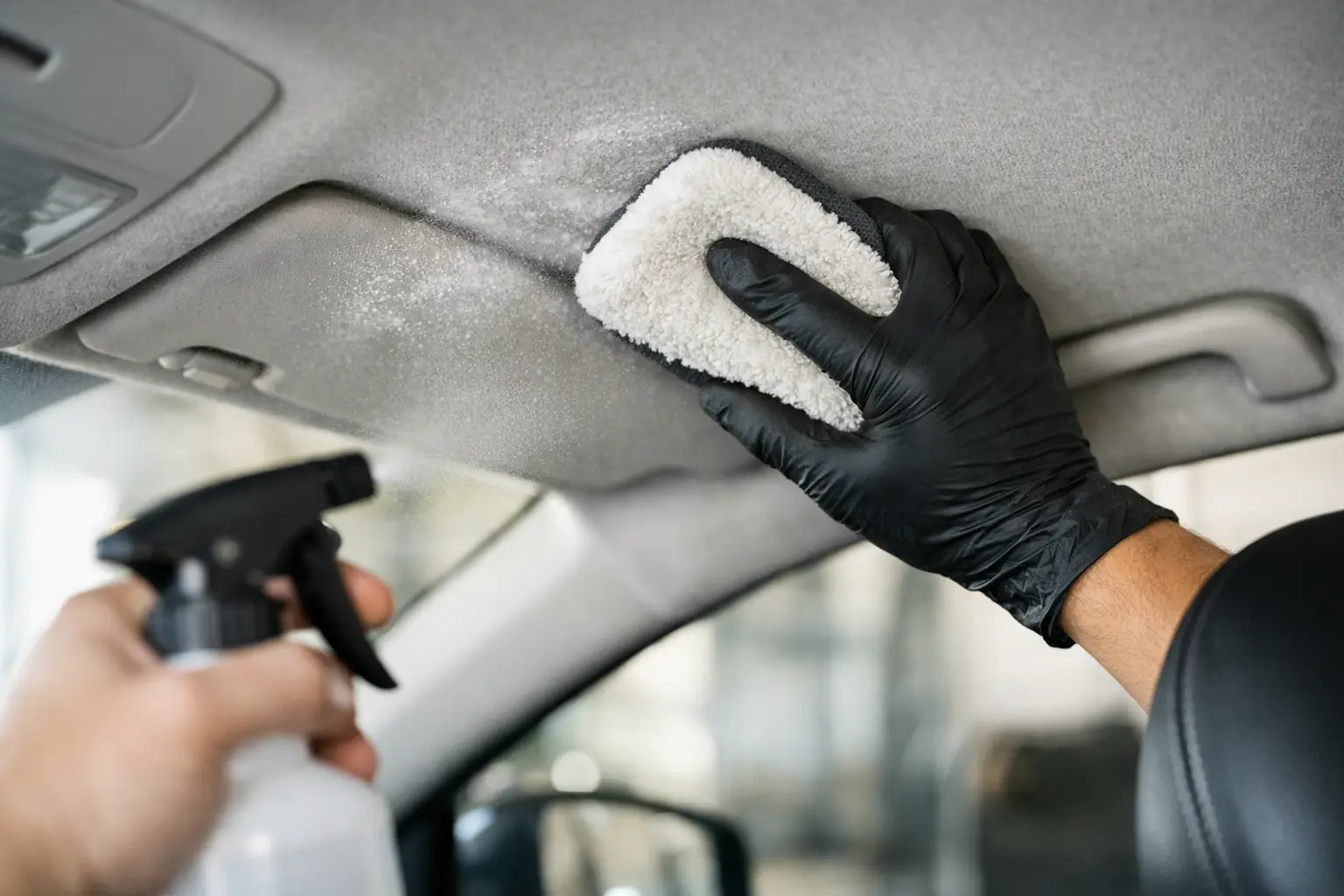
Be especially cautious with the headliner. Its fabric is attached with adhesive, and too much liquid or vigorous scrubbing can cause sagging. Use a lightly damp microfiber towel, work in small sections, and blot rather than saturate.
When a Professional Detailer Makes Sense
DIY work is often the budget-friendly choice, but some situations call for a professional. Severe smoke odor, mold concerns, floodwater exposure, extensive pet contamination, or deeply embedded stains can require specialized equipment and experience. Professional detailers may also have steam tools, ozone equipment, enzyme treatments, and extraction machines that are difficult to justify for occasional home use.
That said, expensive does not automatically mean better. Ask what the service includes, whether upholstery extraction is appropriate for your vehicle, and how long the interior will need to dry. A quality detailer should explain the process and be realistic about stains, wear, and permanent damage. No one can promise to make torn leather or sun-faded plastic look factory-new.
Keep the Results From Fading Fast
The easiest way to protect a deep-cleaned interior is to reduce the mess before it settles in. Empty trash at each fuel stop, vacuum mats regularly, wipe spills immediately, and use fitted floor mats during wet or snowy months. Keeping a small microfiber towel and a basic interior-safe cleaner in the garage can prevent minor spills from becoming permanent stains.
A deep-cleaned cabin does not need to look untouched to be well cared for. It should look, smell, and feel like a vehicle you are comfortable using every day – one where dirt and wear are managed before they become expensive problems.