
A coffee spill on a cloth seat can look permanent within minutes, especially after it dries into the fibers. The good news is that the answer to what cleans car upholstery safely is usually not a harsh household cleaner or an aggressive scrubbing session. It is a fabric-appropriate cleaner, limited moisture, and a methodical approach that removes soil without leaving rings, residue, or damage behind.
For most vehicles with cloth seats, a dedicated automotive upholstery cleaner or a mild, pH-neutral fabric cleaner is the safest starting point. The right choice still depends on the material, the stain, and whether the seat has special features such as perforations, heating elements, or stain-resistant fabric treatments.
Start by Identifying Your Upholstery Material
Before spraying anything, confirm what you are cleaning. Many interiors combine cloth seating surfaces with vinyl, plastic, leather, suede-like inserts, or synthetic trim. A cleaner that works well on a polyester cloth seat may discolor real leather or leave a visible mark on suede-like material.
Check the owner’s manual if you are unsure. It may list care directions for the seat material and specifically warn against cleaners containing bleach, ammonia, peroxide, strong solvents, or silicone. If the manual is unavailable, test any cleaner in a low-visibility area, such as the lower rear edge of a seat cushion. Let it dry completely before treating a larger section.
Cloth upholstery is the most forgiving material, but it can still be damaged by oversaturation. Leather needs a dedicated leather cleaner and conditioner, while Alcantara, microsuede, and similar materials require very light moisture and a cleaner approved for delicate synthetic suede. Do not treat every seat surface as ordinary fabric.
What Cleans Car Upholstery Safely?
A purpose-made automotive upholstery cleaner is usually the simplest and safest option for general dirt, food spots, and light staining. These products are designed to release soil from automotive fabrics while limiting the sticky residue that can attract more dirt later.
A mild solution of warm water and a small amount of clear, dye-free dish soap can also work for fresh, minor stains when a dedicated cleaner is not available. Use it sparingly. Too much soap is difficult to rinse from seat fibers, and leftover detergent can make the upholstery feel stiff or look dingy sooner.
For odor and light surface grime, a fabric-safe interior cleaner can be useful, particularly on door inserts and seat bolsters. For deep-set staining, an upholstery cleaner paired with a soft detailing brush and microfiber towels is generally more effective than simply spraying and wiping.
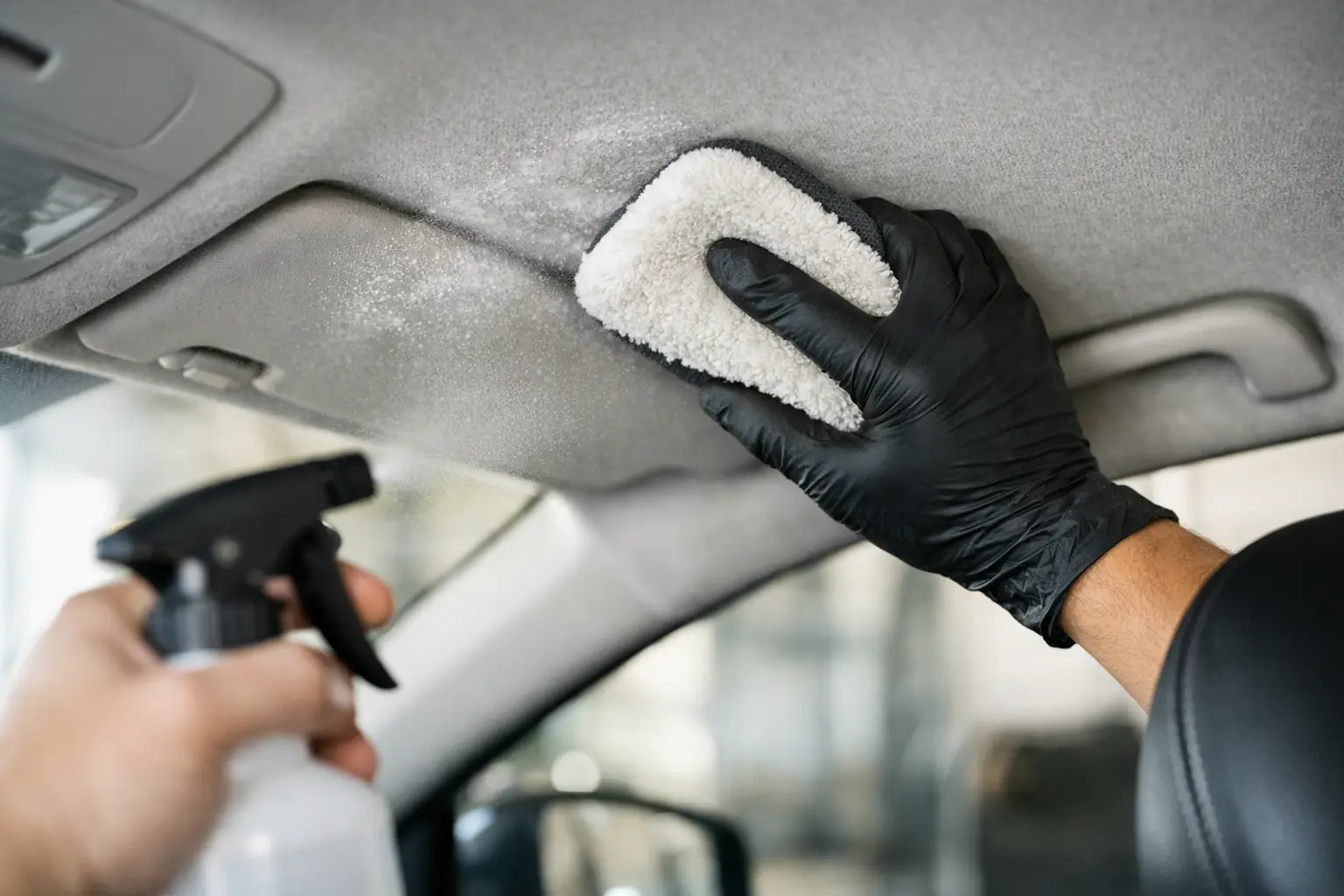
The safest approach is to apply the cleaner to a towel or brush rather than soaking the seat directly. This gives you more control over moisture, which matters because water can travel into the foam padding beneath the fabric. A wet seat pad may take days to dry and can develop a musty smell.
Safe cleaning supplies for cloth seats
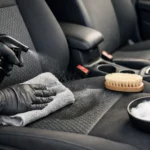
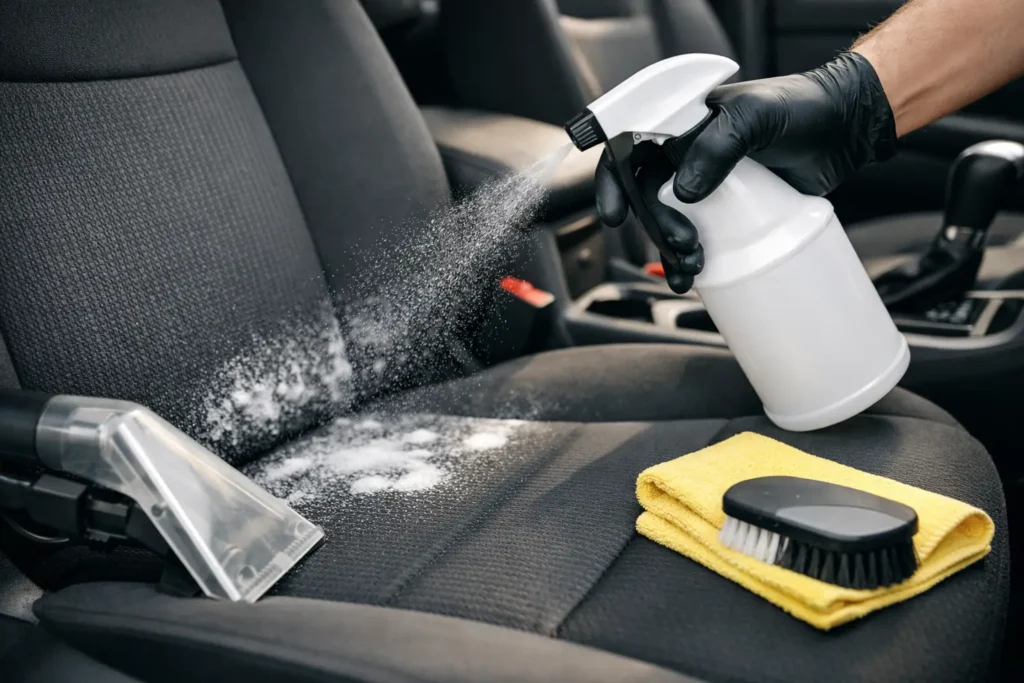
You do not need a professional detailing setup to get good results. Keep the process simple with a vacuum, a fabric-safe upholstery cleaner, several clean microfiber towels, a soft-bristle upholstery brush, and a small bowl of clean water for rinsing towels.
A wet-dry vacuum or portable extractor can be helpful for heavily soiled seats, but it is not required for routine care. If you use one, make only a few slow passes and avoid repeatedly flooding the same area. Extraction is valuable because it removes loosened dirt and cleaner from the fabric, but too much water is still a problem.
A Safe Method for Cleaning Cloth Upholstery
Begin by vacuuming the seats thoroughly. Work along seams, under the seat cushions, and around seat belt buckles. Loose grit is abrasive, and brushing cleaner over it can grind dirt further into the fabric.
Next, treat obvious stains individually. Lightly apply cleaner to a microfiber towel or the stain itself according to the product directions. Blot from the outside of the stain toward the center. This helps keep a coffee, soda, or grease mark from spreading into a larger ring.
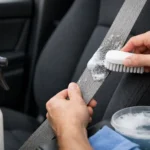
Use a soft brush only when needed. Gentle, short strokes loosen embedded dirt, but hard scrubbing can rough up fabric fibers and leave one area looking fuzzy or lighter than the rest of the seat. On textured upholstery, brush in multiple directions carefully, then blot away the lifted soil with a clean towel.
For a full seat cleaning, work in small sections. Apply a light amount of cleaner, agitate gently, and wipe with a slightly damp microfiber towel to pick up residue. Follow with a dry towel. Do not clean only one small, heavily visible spot if the surrounding fabric is dirty, since the newly cleaned patch may stand out once it dries.
Leave doors or windows open in a dry, ventilated location until the upholstery is fully dry. If possible, park the vehicle in the shade with airflow rather than in direct heat. High heat can set some stains and make chemical odors more noticeable inside the cabin.
How to Handle Common Car Seat Stains
The sooner you act, the better. Fresh spills are easier to remove because they have not had time to bind to fabric fibers or soak into the seat foam.
For coffee, soda, juice, and similar drinks, blot the liquid immediately with a clean towel. Then use a fabric-safe cleaner or a very mild soap solution. Repeat the blotting process instead of rubbing. Sugary drinks often require a follow-up wipe with a lightly damp towel to remove residue that can remain tacky after the stain appears gone.
For greasy food stains, start with an upholstery cleaner formulated to cut through oil. Avoid adding large amounts of water first, since that can spread the grease. Apply the cleaner lightly, agitate with a soft brush, then blot repeatedly with dry microfiber towels.
For mud, allow it to dry first if it is heavily caked on the seat. Vacuuming dry mud is much easier than smearing wet dirt deeper into the upholstery. After vacuuming, clean the remaining discoloration with upholstery cleaner.
Pet accidents, milk, and other organic stains need more than a fragrance-heavy spray. A fabric-safe enzyme cleaner can help break down the source of the odor. Use it according to the label, and avoid combining it with other cleaners. Mixing products can reduce their effectiveness and may create unpleasant fumes.
Cleaners and Methods to Avoid
Strong all-purpose household cleaners can be tempting because they are already under the sink, but they are often too aggressive for automotive fabrics. Bleach can permanently remove color. Ammonia can be harsh on interior materials and should never be used around tinted windows. Solvent-based products may damage adhesives, trim, or stain-resistant coatings.
Avoid laundry detergent, powdered cleaners, and heavily fragranced soaps for seat cleaning. They can leave residue that is difficult to remove without an extractor. Steam should also be used cautiously. Controlled steam can help on certain durable fabrics, but excessive heat and moisture can affect foam, adhesives, sensors, and electrical components inside modern seats.
Do not use a stiff household scrub brush. The goal is to lift dirt, not scour the fabric. If your upholstery has a persistent stain after two careful attempts, it may be time for professional detailing rather than stronger chemicals.
Protect the Results Between Deep Cleanings
Routine maintenance prevents a small spill from becoming a deep-cleaning project. Vacuuming the interior every few weeks removes abrasive grit before it works into the seat fabric. Keep a microfiber towel in the vehicle for quick spill response, especially if kids, pets, or daily coffee runs are part of your routine.
Seat covers can be practical for work trucks, family vehicles, and cars that regularly carry pets. They are not necessary for every driver, but they can reduce wear on high-use seats and make resale preparation easier later. If you use a fabric protectant, choose one labeled for automotive upholstery and apply it only after the seats are clean and fully dry.
Clean upholstery makes a vehicle more comfortable to drive, but it also helps protect the condition buyers notice first when it is time to sell or trade in. Use gentle products, control the moisture, and give stains attention early. That steady approach is safer for your seats than any miracle cleaner.