
A seat belt can look clean until you pull it all the way out. That is when you may notice gray buildup, sunscreen marks, food residue, or a lingering odor on the fabric. Learning to clean seat belt webbing properly improves the feel of your interior, but it also protects a safety component that deserves more care than a quick spray and wipe.
Seat belts are made from tightly woven synthetic fibers designed to hold up under extreme force. Harsh cleaners, bleach, saturated belts, and aggressive scrubbing can weaken or damage that material over time. The goal is simple: lift away dirt without soaking the retractor or leaving behind residue that makes the belt stiff.
Why seat belt webbing gets so dirty
Every time you buckle up, the belt touches clothing, skin, hands, and sometimes pet fur. Body oils, sweat, lotion, makeup, dust, and spilled drinks gradually transfer to the webbing. In family vehicles, the shoulder belt may also collect snack residue and marks from car seats.
The grime is often most visible near the latch plate and the section that crosses your chest. A dirty belt may slide less smoothly, feel rough against your neck, or leave a stale smell in an otherwise clean cabin. Cleaning it occasionally is a worthwhile detailing task, especially before selling a car or after buying a used one.
What you need to clean seat belt webbing
Use gentle supplies that are unlikely to leave harsh chemicals in the fibers. A vacuum with a brush attachment, two microfiber towels, a soft detailing brush or upholstery brush, a bucket of warm water, and a mild fabric or upholstery cleaner are usually enough.
A small amount of mild dish soap mixed into water can work for light soil. For heavier grime, use an automotive upholstery cleaner labeled safe for synthetic fabric. Avoid bleach, strong degreasers, concentrated all-purpose cleaners, and solvent-based products. These may discolor the webbing, leave it dry or stiff, or affect the belt’s long-term condition.
You will also want a sturdy clip, clamp, or binder clip. Its job is to keep the belt extended while it dries, so it does not retract into the pillar while damp.
How to clean seat belt webbing safely
Start in a shaded, well-ventilated area. Direct sun can dry cleaner too quickly and make it harder to remove evenly. Open the doors and move the front seats as needed for access.
Pull the belt fully out and secure it
Slowly pull the seat belt all the way out until you reach the end of its travel. Place your clip on the belt near the upper anchor or at the edge of the pillar trim, preventing the retractor from pulling the webbing back in.
Do not disassemble the belt, remove its mounting hardware, or spray cleaner into the retractor opening. The retractor contains a locking mechanism, and flooding it with water can create problems that are far more serious than a dirty belt.
Inspect both sides of the webbing before cleaning. Look for frayed edges, cuts, melted spots, severe fading, or areas that feel unusually thin. Cleaning will not fix physical damage. If you find damage, have the belt inspected by a qualified repair facility or dealership before relying on that seating position.
Vacuum loose debris first
Run a vacuum brush along both sides of the extended belt. This removes dust, crumbs, pet hair, and dry dirt before moisture turns it into a muddy film. Pay extra attention to the folds around the latch plate, but do not force the latch plate against the fabric.
This step may seem minor, but it reduces how much brushing and cleaner you need later. Less agitation is always better for safety-related fabric.
Apply cleaner to a towel or brush, not the retractor
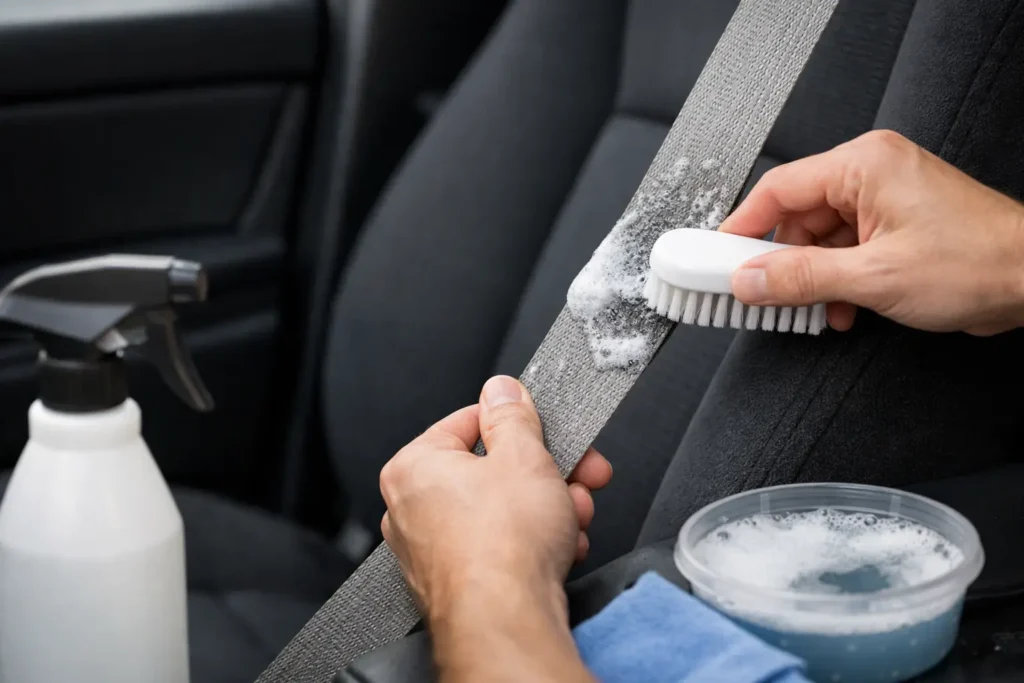
Mist your cleaner onto a microfiber towel or soft brush rather than directly saturating the belt. Work in sections of about 12 to 18 inches, beginning near the upper portion and moving downward.
Gently agitate the webbing with the brush. Use short strokes in the direction of the weave, then wipe the section with a clean, damp microfiber towel. The towel should be damp, not dripping. Repeat as needed until the towel stops picking up visible soil.
For a stubborn spot, let a small amount of upholstery cleaner sit briefly according to its label directions, then brush lightly and wipe it away. Do not scrape stains with a hard brush, razor, or abrasive pad. If a mark does not improve after two or three passes, it is better to accept a slight stain than risk damaging the fibers.
Wipe away residue
Once the webbing looks clean, wipe every section with a separate microfiber towel lightly dampened with plain water. This step matters because leftover soap or cleaner can make the belt feel tacky and attract more dirt.
Squeeze excess water from your towel before using it. The belt should be cleaned with controlled moisture, not soaked like removable upholstery. If the webbing becomes very wet, blot it firmly with a dry towel before moving on.
Let the belt dry completely
Leave the belt fully extended and clipped in place until it is completely dry on both sides. Depending on humidity, ventilation, and how much moisture was used, drying can take several hours. Open doors or windows when practical, or use a fan nearby to improve airflow.
Do not retract a damp belt into the pillar. Trapped moisture can contribute to odor and may keep the retractor area damp longer than necessary. Avoid using a heat gun, hair dryer on high heat, or space heater close to the belt. High heat is unnecessary and can be hard on synthetic fibers.
When the webbing feels fully dry, remove the clip and allow it to retract slowly. Pull it out once more and let it retract again to confirm it moves smoothly. Buckle and unbuckle the latch plate to make sure it operates normally.
Dealing with odors and tougher stains
Odor usually comes from body oils, spilled beverages, or moisture that has remained in the cabin. A thorough gentle cleaning and complete drying often solves the problem. If odor remains, use a fabric-safe odor treatment sparingly on a towel, then wipe the belt rather than soaking it.
For grease, makeup, or sunscreen, a dedicated upholstery cleaner may work better than a soap-and-water mix. Test any cleaner first on a small, less-visible section of the belt. Color transfer onto your towel, fading, or a rough texture are signs to stop using that product.
Mold or mildew is different. If the seat belt has visible mold, a persistent mildew smell, or has been exposed to floodwater, professional inspection is the safer route. A belt that has been heavily contaminated or water-damaged may need replacement, not cosmetic cleaning.
Mistakes to avoid when cleaning seat belts
The biggest mistake is treating the belt like an ordinary piece of interior fabric. Do not use bleach to brighten it, dye it to hide discoloration, or apply fabric protectant unless the vehicle manufacturer specifically approves it. Coatings can change how the webbing feels and may collect residue.
Avoid pressure washers, steam cleaners, and soaking the belt in a bucket. These methods send too much moisture into areas you cannot easily dry. Also skip stiff brushes and drill-powered brush attachments. They are useful for durable carpets, not for restraint webbing.
Never twist the belt tightly to wring out water. Instead, press it between dry microfiber towels to absorb moisture. And if the belt retracts poorly after cleaning, do not lubricate it with silicone spray or oil. Clean any visible residue from the webbing, let it dry, and seek professional advice if the problem continues.
How often should you clean seat belt webbing?
For most vehicles, cleaning seat belts once or twice a year is enough. Add it to a deeper interior-detailing session in spring and fall, or clean sooner after a spill, illness, a beach trip, or a messy road trip with kids or pets.
Frequent light cleaning is preferable to waiting until the belts are deeply stained. A quick wipe with a damp microfiber towel after a spill can prevent a larger job later and helps your interior stay comfortable without overworking the webbing.
A clean seat belt is a small detail, but it is one you touch on every drive. Treat it gently, let it dry fully, and inspect it as you work. That approach keeps your cabin fresher while giving a critical safety system the care it deserves.