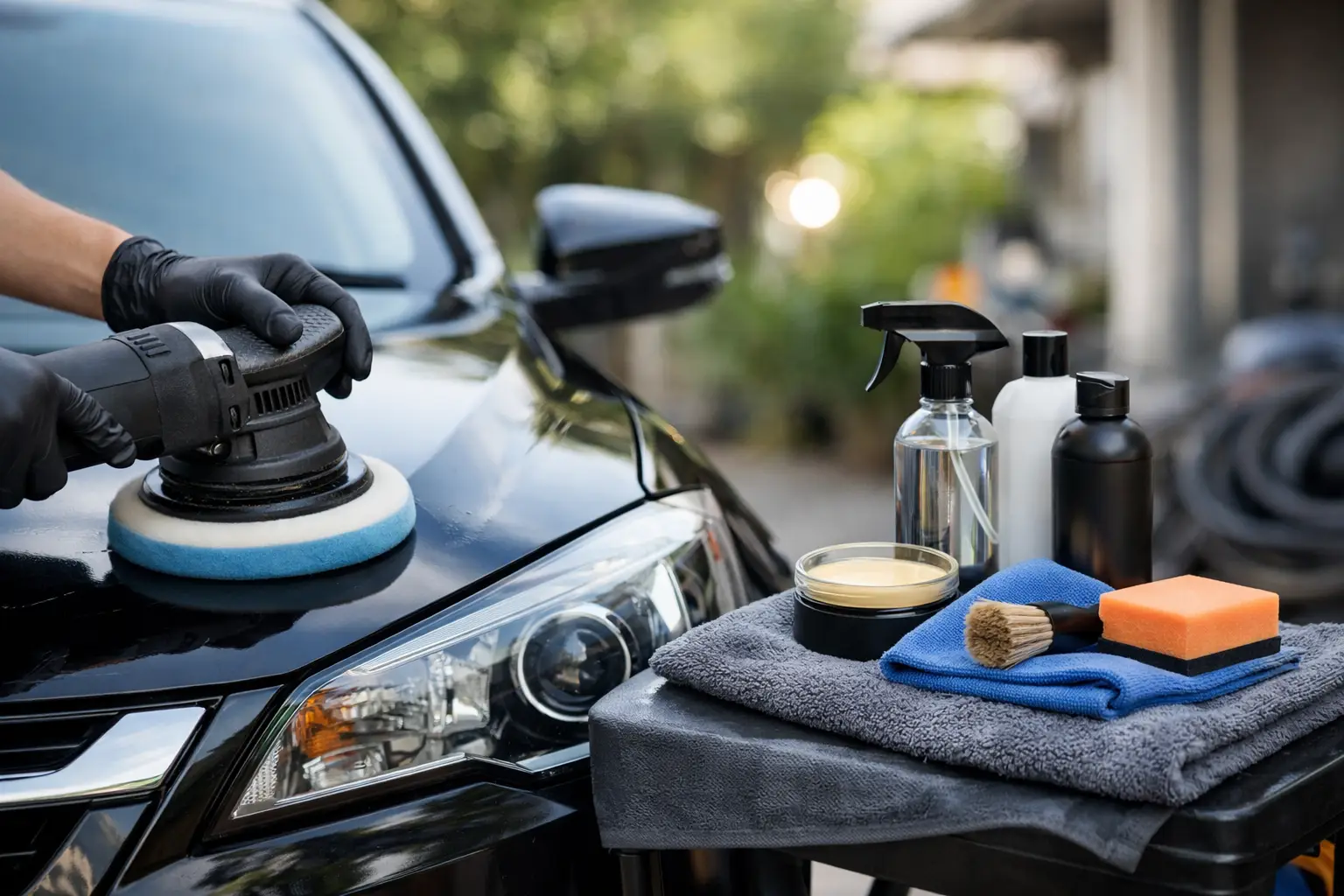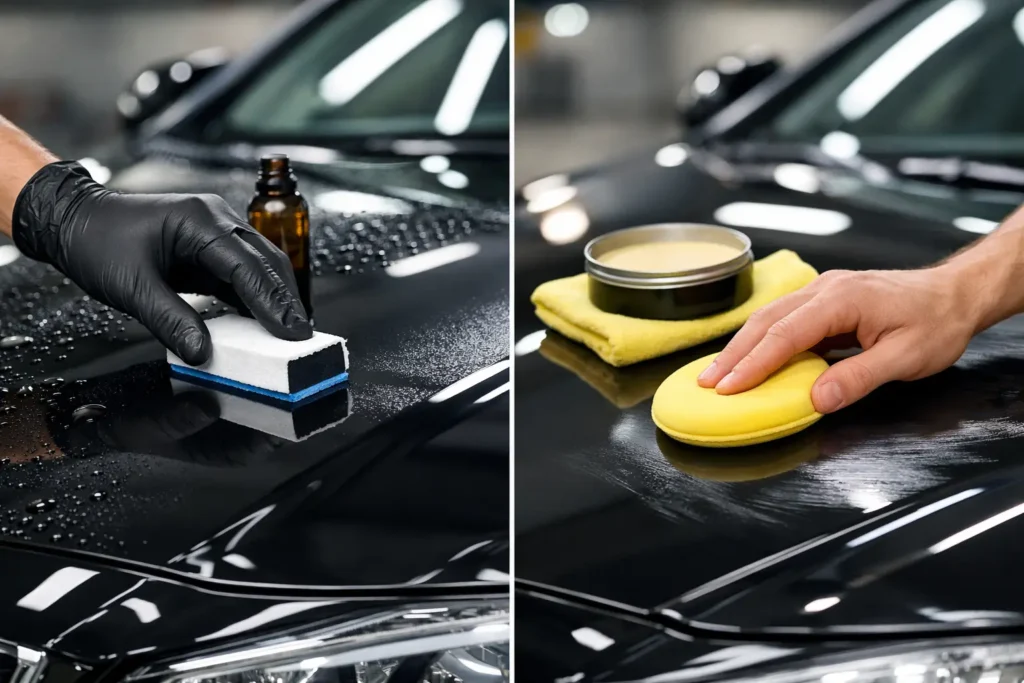

A freshly washed car can look great after either product, but the difference between ceramic coating versus car wax becomes obvious a few weeks or months later. Wax is quick, forgiving, and inexpensive. Ceramic coating lasts much longer and offers stronger chemical resistance, but it demands better paint preparation and a larger upfront investment.
For most owners, the right choice is not about buying the most expensive bottle. It is about how you use your vehicle, how much prep work you can realistically handle, and whether you prefer routine maintenance or longer-term protection.
Ceramic Coating Versus Car Wax: The Main Difference
Car wax is a sacrificial protective layer, usually made from natural carnauba, synthetic polymers, or a blend of both. It sits on top of the paint, adds gloss, and helps water bead for a limited time. Depending on the formula, weather, washing habits, and where the car is parked, traditional wax may last anywhere from a few weeks to a few months.
Ceramic coating is a liquid paint protectant that chemically bonds to the clear coat as it cures. Most consumer products use silicon dioxide, often called SiO2, or similar ceramic-based ingredients. Once cured, the coating forms a more durable protective layer that resists water, dirt, road film, UV exposure, and many common contaminants better than wax.
Neither option makes paint invincible. A ceramic coating will not stop rock chips, prevent door dings, or erase scratches. It is also not a substitute for paint protection film on high-impact areas. Its real strengths are easier cleaning, stronger resistance to environmental grime, and longer service life.
How They Compare in Everyday Ownership
Durability
Durability is the biggest dividing line. A quality paste or liquid wax may hold up for one to three months under normal conditions, although frequent automatic washes, intense sun, road salt, and harsh cleaners can shorten that window. Synthetic sealants often last longer than traditional carnauba wax, but they still require regular reapplication.
A consumer-grade ceramic coating commonly lasts one to three years when applied correctly and maintained with pH-balanced wash products. Professional coatings can be rated for longer periods, though those ratings should be treated as estimates rather than guarantees. Exposure, maintenance, and the condition of the paint all matter.
If you enjoy washing and detailing your car several times a year, wax is not a burden. If you want less frequent reapplication and easier cleanup during regular washes, ceramic coating has the advantage.
Shine and Appearance
Wax has earned its reputation for a reason. A good carnauba wax can give paint a warm, deep glow, particularly on darker colors. It is a popular choice for weekend cars, older vehicles, and owners who enjoy the hands-on detailing process.
Ceramic coating usually delivers a sharper, glass-like gloss. It can make color look clearer and more reflective, especially when the paint has been polished beforehand. The coating itself does not correct dull paint, oxidation, swirl marks, or scratches. It preserves and highlights the finish underneath it.
That point matters. Applying a ceramic coating over neglected paint can lock in the look of those imperfections for years. Wax is more forgiving because it can be removed or reapplied easily, and some formulas temporarily fill very light swirls.
Water Behavior and Cleaning
Both products improve water beading, but ceramic coatings typically create stronger water repellency for a longer period. Water, mud, and grime have a harder time sticking to the surface, so washing often takes less effort. Bugs and bird droppings still need to be removed promptly, but they are usually easier to clean off a coated vehicle.
Wax also makes washing easier, just for a shorter period. Once its protection fades, water may stop beading and the paint will feel less slick. That is your cue to clean the vehicle thoroughly and apply another coat.
Do not judge protection by water beads alone. Some protected surfaces sheet water instead of forming tight beads, and contaminants can reduce hydrophobic behavior before the underlying protection has fully failed. A clean surface and proper washing technique are still essential.
Cost and Time
Wax is the budget-friendly option. A container can cost relatively little and provide multiple applications. Most owners can apply it by hand in an afternoon after washing and drying the car. The downside is recurring effort: you will need to repeat the process several times a year.
DIY ceramic coating costs more, and the prep process takes longer than the coating application itself. At minimum, the vehicle should be washed, decontaminated with an iron remover or clay treatment when needed, and wiped down with a panel-prep solution. Paint correction is strongly recommended if swirls and scratches are visible.
Professional ceramic coating can cost hundreds or thousands of dollars depending on vehicle size, paint condition, correction work, and coating type. That price often reflects labor-intensive preparation, not just the coating bottle. It can make sense for a newer vehicle you plan to keep, but it is not automatically the best value for every daily driver.
Choosing Ceramic Coating or Wax
Choose wax if you want an affordable way to improve shine, enjoy detailing your own car, or drive an older vehicle with paint that may need future correction or repair. It is also a smart starting point for beginners. You can learn proper washing, drying, and application techniques without worrying about high-stakes curing errors.
Choose ceramic coating if you keep your car outside, drive through harsh weather, want easier wash days, or plan to own the vehicle for several years. It is especially useful for commuters who do not have time to wax frequently but still want paint to stay cleaner and glossier.
There is also a middle ground. A spray ceramic sealant or hybrid wax can offer better durability than basic wax without the demanding prep and permanence of a true coating. These products are often a practical fit for daily drivers because they apply quickly after a wash and can be refreshed every few months.
Preparation Matters More Than the Product Label
The biggest mistake is applying protection to a dirty or contaminated surface. Wax can trap grime and make paint look uneven. Ceramic coating can bond poorly or cure over visible defects, leaving you with a finish that is harder to correct later.
Before applying either product, wash the car thoroughly and dry it with clean microfiber towels. If the paint feels rough after washing, it likely has bonded contamination that needs to be removed. For ceramic coating, use a panel-prep spray after decontamination and polishing so oils and residue do not interfere with bonding.
Work in the shade on cool paint. Direct sunlight can cause wax to haze too quickly and can make ceramic coating difficult to level. Read the product instructions closely, especially for cure time, temperature limits, and whether a second coat is recommended.
Maintenance After Application
Ceramic coating does not mean you can stop washing your car. Dirt, minerals, and oily road film still collect on the surface. Regular washing prevents buildup that can reduce gloss and water behavior over time.
Use a pH-balanced car shampoo, clean microfiber wash mitts, and separate buckets or a rinse method that limits grit contact with the paint. Avoid using dish soap, which can strip wax and may leave surfaces dry. Touchless washes are generally safer than brush tunnels, but strong chemicals at any automatic wash can shorten the life of wax and affect a coating’s water repellency.
For coated vehicles, a ceramic-compatible drying aid or maintenance spray can restore slickness and water behavior between deeper washes. For waxed vehicles, reapply protection when water stops behaving as expected or the paint no longer feels smooth and protected.
A Practical Decision for Most Drivers
Wax is still a worthwhile paint protectant. It is inexpensive, beginner-friendly, and capable of producing a great-looking finish when applied to clean paint. Ceramic coating is better for long-term durability and easier maintenance, but its performance depends heavily on careful preparation.
Start with the protection level you can maintain. A properly applied wax refreshed on schedule will protect your paint better than an expensive ceramic coating applied hurriedly over a dirty surface. Build good wash habits first, then choose the product that makes caring for your car easier to keep doing.