
Your paint needs protection before it looks dull
A new car can lose its deep gloss faster than most owners expect. Road grit, bird droppings, tree sap, UV exposure, automatic car washes, and even improper hand washing slowly wear on the clear coat. This car paint protection guide breaks down what actually protects your finish, what each option costs in time and money, and where a simple DIY routine makes the biggest difference.
The goal is not to make your vehicle invincible. Every protective product has limits. The goal is to reduce avoidable damage, make routine cleaning easier, and keep the paint looking better for longer – especially if you plan to keep the vehicle for years or want to preserve resale value.
Start with the clear coat
Most modern vehicles have a color layer covered by a transparent clear coat. That clear coat provides gloss and acts as the first line of defense, but it is thin. Swirl marks, light scratches, oxidation, water spots, and chemical stains typically affect this upper layer first.
Paint protection products sit on top of the clear coat or, in the case of paint protection film, form a physical barrier over it. They cannot repair deep scratches, peeling clear coat, or corrosion. If your paint is already heavily scratched or oxidized, correction may be needed before applying a long-term coating. Otherwise, you may lock in the defects beneath the protection.
The best protection begins with safe washing
The product you apply matters, but washing habits matter more than many people realize. Dragging dirt across dry paint is one of the quickest ways to create fine scratches and dull the finish.
Wash your car when the surface is cool and out of direct sunlight when possible. Rinse thoroughly first to remove loose debris. Then use a pH-balanced car shampoo, a clean microfiber wash mitt, and plenty of water. Work from the roof downward because the lower panels, wheels, and rocker areas carry the heaviest grime.
Avoid household dish soap. It can strip existing wax or sealant and may dry out exterior trim. Also avoid using the same towel or mitt on wheels and paint. Brake dust and road grit are abrasive, and a wheel towel can easily leave scratches in your clear coat.
After washing, dry with clean microfiber drying towels or a dedicated car dryer. Do not let water air-dry if you can help it, particularly in areas with hard water. Mineral deposits can leave water spots that become more difficult to remove over time.
Car paint protection options explained
There is no single best choice for every driver. A commuter parked outside all day has different needs than a weekend vehicle stored in a garage. Your budget, available time, climate, and expectations should guide the decision.
Carnauba wax
Traditional car wax remains popular because it is affordable, easy to find, and can add a warm, rich shine. It also improves water beading and provides a modest barrier against environmental contamination.
The trade-off is durability. Depending on weather and wash habits, many waxes last only a few weeks to a couple of months. Wax is a good option for owners who enjoy regular detailing and want a straightforward weekend project. It is less ideal for someone who wants protection with minimal maintenance.
Synthetic paint sealant
Paint sealants are synthetic products designed to last longer than most traditional waxes. They usually offer crisp gloss, strong water behavior, and dependable protection for several months.
For many DIY owners, a sealant is the practical middle ground. It costs less than a professional coating, is generally forgiving to apply, and does not require constant reapplication. Surface preparation still matters. Applying sealant over dirt, embedded contamination, or old residue limits its performance.
Ceramic spray coatings
Ceramic spray products have made longer-lasting protection more accessible. Most use silicon dioxide-based chemistry to create a slick, hydrophobic layer that helps repel water and makes dirt easier to wash away.
A quality ceramic spray can last several months, though real-world durability depends on preparation and maintenance. Do not confuse it with a professionally installed ceramic coating. Spray products are convenient and useful, but they do not provide the same lifespan or chemical resistance as a true coating.
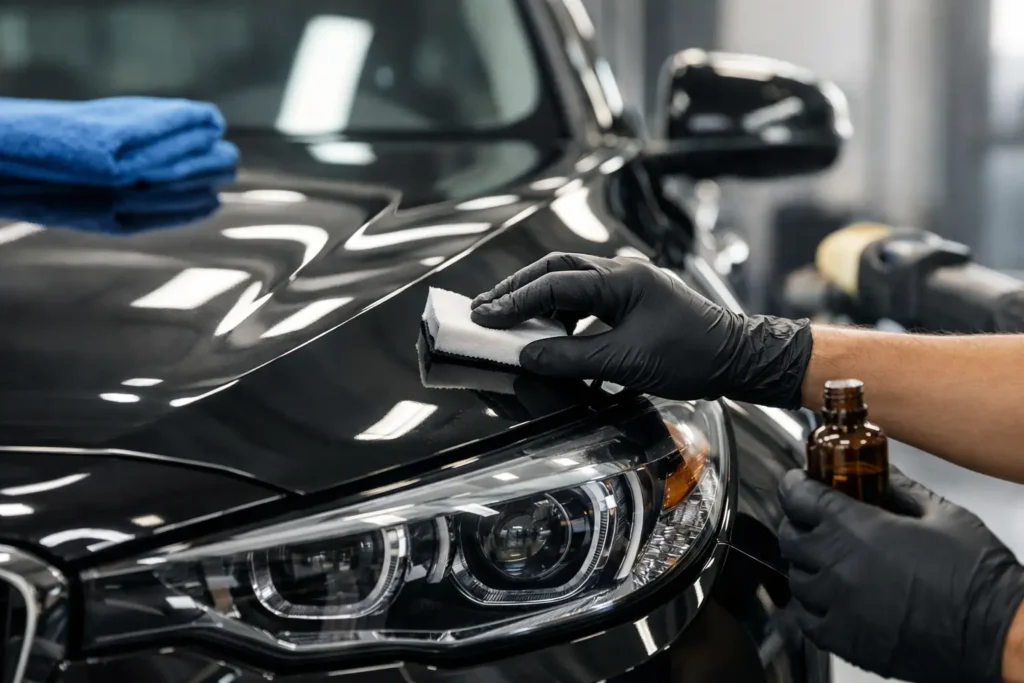
They are an excellent choice for owners who want more durability than wax without committing to an involved application process. Use them on clean, decontaminated paint and follow the directions closely. Applying too much product can leave streaks or high spots.
Professional or DIY ceramic coatings
True ceramic coatings are semi-permanent protective layers that bond more strongly to the paint than waxes, sealants, or spray coatings. They can improve gloss, resist chemical contaminants, and make washing easier for years when properly applied and maintained.
The biggest benefit is reduced maintenance effort, not scratch-proof paint. Ceramic coatings do not prevent rock chips, door dings, or deep scratches. They can reduce light marring and offer some resistance to minor damage, but advertising claims around hardness are often overstated.
A DIY coating can be worthwhile for a careful owner with a clean workspace, good lighting, and patience. Professional installation costs more because paint correction, thorough prep, and precise application take time. If your vehicle has noticeable swirls or you are not comfortable correcting application mistakes, professional work may be the better value.
Paint protection film
Paint protection film, often called PPF or clear bra, is the strongest option for defending against physical impacts. It is a clear urethane film applied to painted panels, commonly the front bumper, hood, fenders, mirror caps, and rocker panels.
PPF is the best choice for chip-prone areas, frequent highway driving, gravel roads, or vehicles with expensive paintwork. Many modern films can self-heal minor surface marks with heat. The trade-off is cost. Full-vehicle coverage can be expensive, and quality installation is not a beginner project.
For most daily drivers, partial front-end coverage may be the most sensible compromise. You can pair PPF with a ceramic coating or sealant on the remaining paint for easier cleaning and broader environmental protection.
Prep work determines the result
Protection products perform best on clean, smooth paint. Before applying wax, sealant, or a coating, wash the vehicle thoroughly and remove bonded contamination with a clay bar or synthetic clay mitt. If the paint feels rough after washing, contamination is likely present.
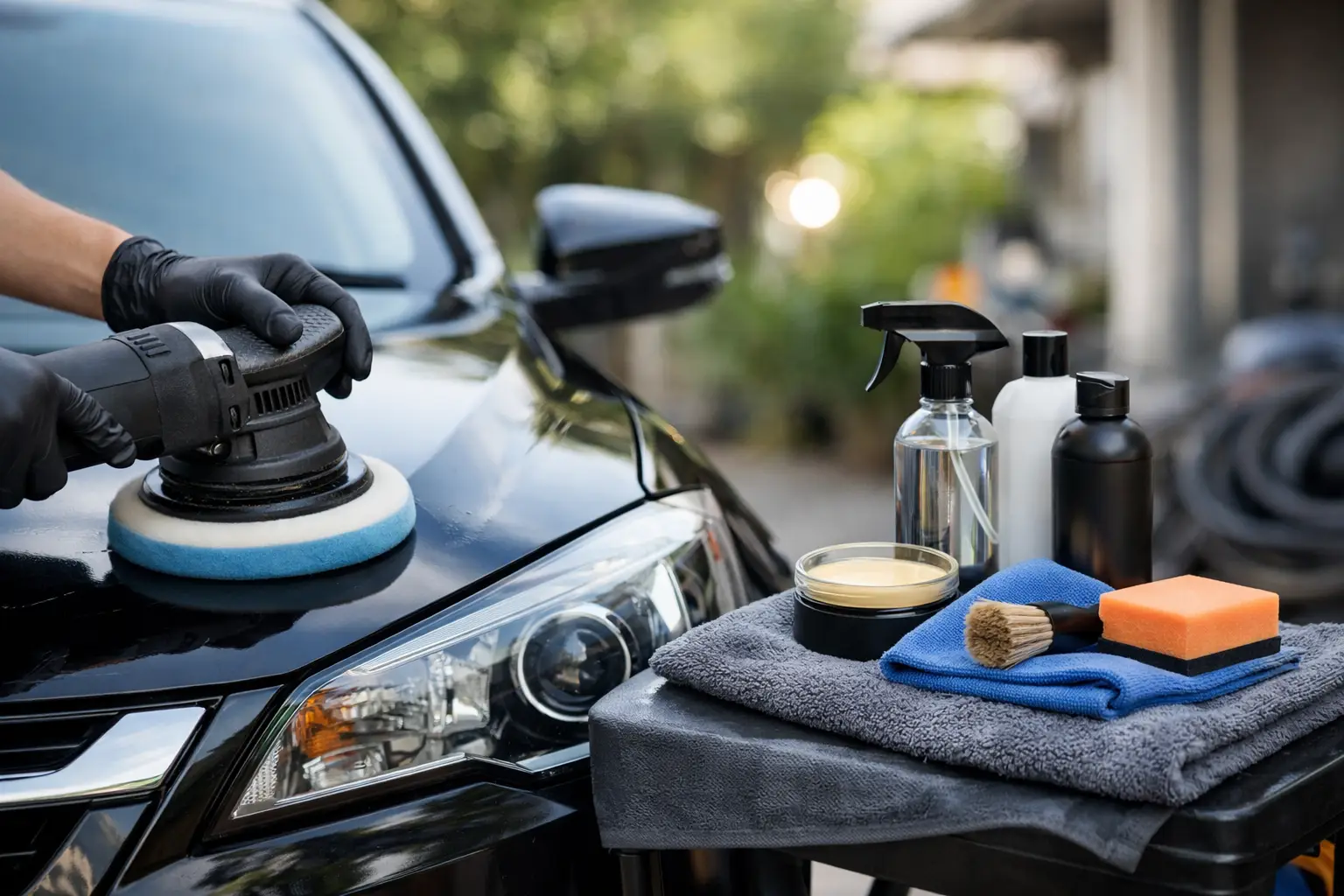
Use a clay lubricant and light pressure. Aggressive claying can create marring, particularly on dark paint. Follow with a polish if needed, then remove polishing oils with a suitable panel prep product before applying a ceramic coating.
For basic wax or sealant applications, perfection is not required. A careful wash, decontamination, and dry surface will deliver a noticeable improvement. Ceramic coatings demand more preparation because defects become easier to see once the coating adds gloss.
Protect the paint between details
Long-term results come from small habits. Remove bird droppings, bug splatter, and tree sap as soon as practical. These contaminants can etch clear coat, especially when baked on by the sun. Keep a soft microfiber towel and a paint-safe quick detailer in the vehicle for spot cleaning when needed.
Be cautious at automatic car washes. Touchless washes are generally gentler on paint, though strong chemicals may weaken some protective products over time. Brush-style tunnel washes are convenient, but dirty brushes can create swirls. If appearance matters to you, hand washing or a quality touchless wash is the safer choice.
Parking also makes a difference. A garage or covered space reduces UV exposure, sap, and bird droppings. When covered parking is unavailable, choose shade carefully. Parking under a sap-producing tree can be worse for paint than parking in open sunlight for a short period.
A practical protection plan for most owners
You do not need an expensive coating to care for your paint well. A sensible routine for a daily driver is to wash safely every two to four weeks, apply a ceramic spray protectant every few months, and decontaminate the paint once or twice a year as needed. Inspect high-impact areas regularly for chips, and touch them up before moisture reaches the metal.
If you drive many highway miles, have a newer vehicle you want to preserve, or regularly face gravel and construction zones, consider PPF on the front bumper and other vulnerable panels. If your priority is low-effort cleaning and lasting gloss, a properly installed ceramic coating may justify its higher upfront cost.
The best paint protection is the one you can maintain consistently. Start with safer washing, choose a product that fits your routine, and give the finish attention before damage becomes permanent.