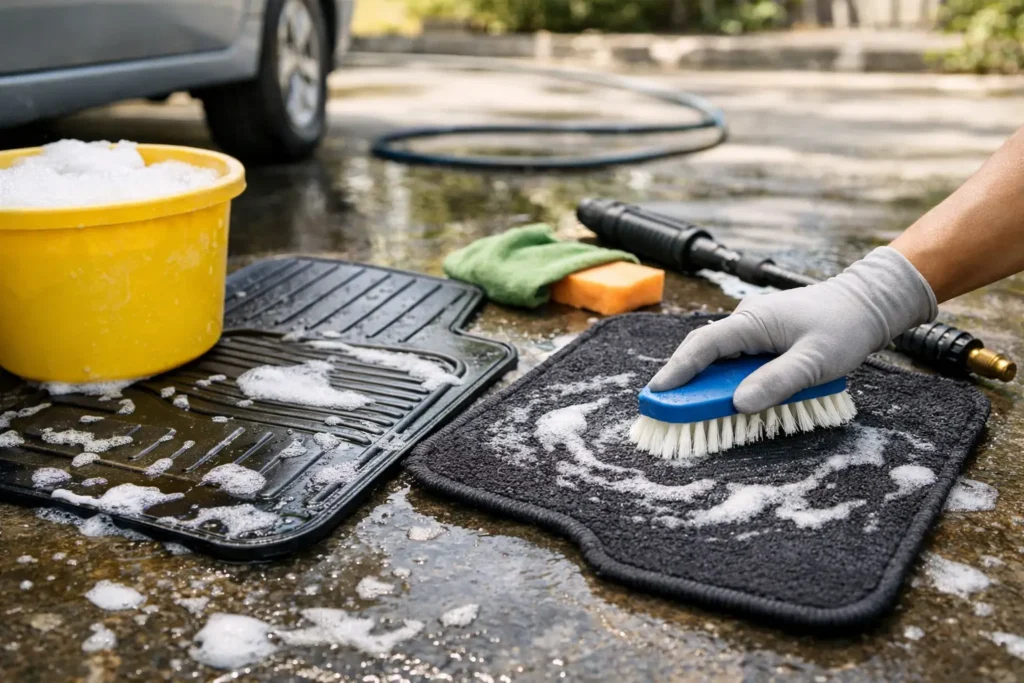

A spilled coffee, muddy shoes, and a season of wet weather can make floor mats look far worse than the rest of the cabin. So, can car mats be washed? Usually, yes – but the safest method depends on whether you have carpet, rubber, or molded all-weather mats. Using too much water on the wrong material, or putting mats back while they are still damp, can leave you with odors, mildew, and a dirty-looking interior all over again.
Can Car Mats Be Washed Without Damaging Them?
Most removable car mats are designed to be cleaned. Rubber and thermoplastic all-weather mats tolerate water very well, while carpet mats can be washed more carefully with a fabric-safe cleaner and limited moisture. The key is to remove the mats from the vehicle before cleaning them. Spraying or scrubbing them inside the car sends dirty water into the carpeting underneath and makes drying much harder.
Before you start, check the back of the mat and your owner’s manual if available. Some premium carpet mats, wool-blend mats, and mats with delicate stitched logos may have specific care instructions. A quick inspection also tells you whether you are dealing with surface dirt or an issue that needs more attention, such as salt residue, grease, mold, or a lingering pet odor.
For a basic cleaning session, gather a vacuum, a soft or medium-bristle brush, microfiber towels, a bucket, mild car-cleaning soap or fabric cleaner, and a hose with a gentle spray setting. You do not need harsh household chemicals to get good results.
How to Wash Carpet Car Mats
Carpet mats collect fine dust, food crumbs, hair, road salt, and moisture deep in their fibers. They can be washed, but soaking them for long periods is not the best approach. Their backing, adhesive layers, and insulation can hold water, which makes them slow to dry and more likely to smell musty.
Start by removing the mats and shaking them outside. Vacuum both sides thoroughly, especially around the heel pad and edges where compacted dirt tends to hide. This step matters more than many people realize. If you add cleaner before removing loose debris, you can turn dry grit into muddy residue that takes longer to rinse away.
Spray a carpet or upholstery cleaner over the dirtiest areas, following the product directions. For an inexpensive DIY option, use a small amount of mild detergent mixed with warm water. Avoid using a heavy concentration of dish soap, since it can leave residue that attracts more dirt later.
Work the cleaner into the fibers with a brush using short, controlled strokes. Concentrate on stains, salt lines, and worn areas near the pedals, but do not scrub aggressively enough to fray the carpet. Let the cleaner sit briefly, then rinse with a light stream of water. A pressure washer can be too forceful for carpet mats and may separate the backing or damage stitched edges.
After rinsing, press the mats with clean microfiber towels to absorb as much water as possible. Hang them over a railing, drying rack, or sturdy clothesline in a warm, ventilated area. Give both sides exposure to air. Depending on humidity and mat thickness, carpet mats may need several hours or a full day to dry completely.
If you have access to a wet-dry vacuum, it can pull a surprising amount of water from the carpet after rinsing. That can shorten drying time and make a real difference if you need your vehicle the next morning.
Treating stains and winter salt
For fresh food or drink stains, blot first rather than rubbing. Then apply cleaner and brush gently from the outside of the stain toward the center. This reduces the chance of spreading it through the fibers.
White or gray crusty marks are often road salt, especially in northern states. A light solution of equal parts white vinegar and water can help loosen salt deposits after vacuuming. Test it on a small hidden section first, then wipe or lightly spray the affected area, brush gently, and rinse. Do not leave vinegar on the mat without rinsing, and do not use it on mats with special finishes unless the manufacturer approves it.
Washing Rubber and All-Weather Mats
Rubber and molded all-weather mats are the easiest type to wash. They are built to contain water, slush, sand, and mud, so a hose rinse is usually appropriate. Take them out of the car, shake off loose debris, and rinse from top to bottom.
Use a soft brush and mild soap to clean the grooves, channels, and raised edges. Those textured areas are what keep messes off your vehicle’s carpeting, but they also trap dirt. A dedicated wheel-and-tire brush is often too stiff for this job, so use a softer brush reserved for interior work.
Rinse the mats thoroughly and stand them upright to drain. Wipe them dry with a microfiber towel before reinstalling. Rubber mats dry much faster than carpet, but water can still pool underneath if they are placed back in the footwell too soon.
Avoid silicone-heavy tire shine, greasy dressings, and glossy protectants on floor mats. They can create a slippery surface under your shoes, which is especially dangerous on the driver’s side. If you want a cleaner finished look, choose a water-based interior protectant labeled safe for rubber or vinyl and designed to leave a natural, non-slip finish.
What Not to Do When Cleaning Car Mats
Washing mats is simple, but a few shortcuts create preventable problems. Do not put a driver’s mat back if it is warped, curled, or unable to sit flat. It can interfere with pedal movement or slide forward under the brake or accelerator. Check that the factory retention clips or hooks are secure every time you reinstall it.
Do not machine-wash or machine-dry mats unless the manufacturer specifically says it is safe. The heat and tumbling action can deform rubber, shrink carpet materials, loosen backing, and damage anti-slip components. The same caution applies to leaving rubber mats in direct, extreme heat for extended periods.
It is also wise to skip bleach, strong degreasers, and abrasive scouring pads. They may fade carpet, dry out rubber, or leave behind irritating chemical residue in a closed vehicle. Mild products used consistently are safer than aggressive chemicals used once in a while.
Finally, never stack two mats in the driver’s footwell. Even if both appear to fit, extra layers can bunch up and become a safety hazard. Use the mat designed for the vehicle and secure it in its proper position.
How Often Should You Wash Car Mats?
For most drivers, a vacuum every few weeks and a deeper wash every one to three months is a practical routine. Your conditions may call for more frequent attention. Families with young children, pet owners, rideshare drivers, and people who park outdoors or commute through snow and rain will likely need to clean mats more often.
Do not wait until the mats look terrible. Regular cleaning keeps abrasive sand and grit from wearing through carpet fibers, helps prevent odors, and keeps moisture from sitting against the vehicle’s floor. It also makes the cabin more pleasant on the daily drive and presents better when it is time to sell or trade in the vehicle.
If a mat remains stained, smells bad after a full cleaning, has broken retention hardware, or has worn through near the pedals, replacement is often the better choice. A clean mat cannot correct a fit or safety problem.
A few minutes of mat care can make the entire interior feel better maintained. Just make sure each mat is clean, flat, secure, and completely dry before it goes back in the car.