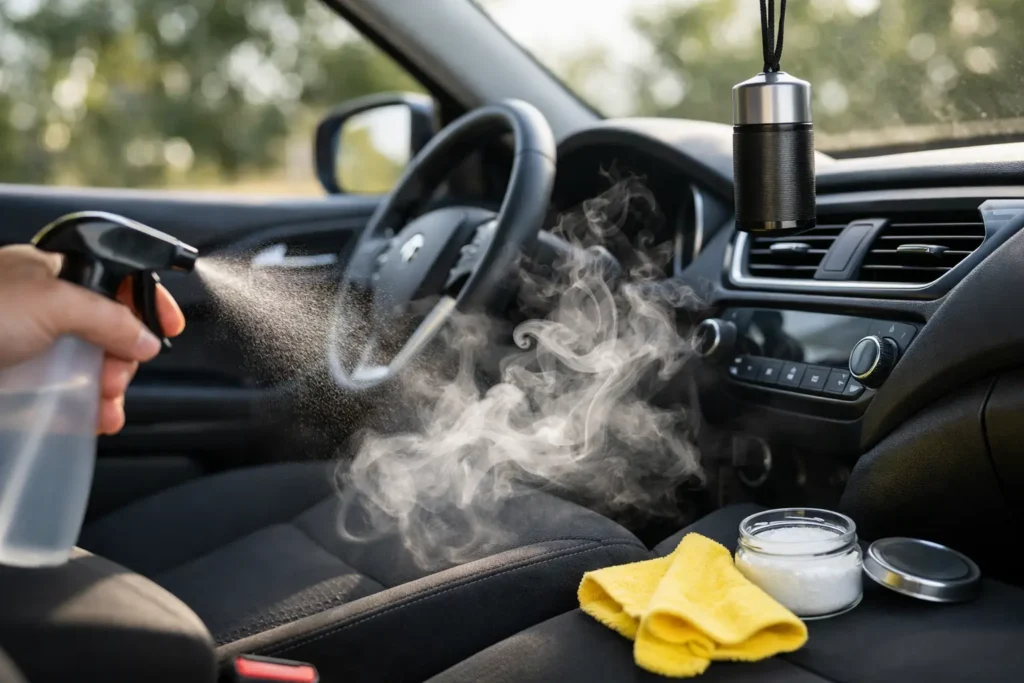

A hanging air freshener can cover a bad smell for a few days, but it cannot solve the reason it is there. Learning how to eliminate car odors starts with tracking down what is holding the smell: spilled liquid in carpet padding, old food under a seat, moisture in the cabin filter, or smoke residue on interior surfaces. Remove the source, and your car can smell clean without relying on heavy fragrances.
Find the Source Before You Start Cleaning
Odors tend to collect in soft, porous materials. Carpet, seat fabric, headliners, floor mats, and trunk liners absorb spills and airborne residue far more readily than plastic trim. Start by removing everything that does not belong in the vehicle, including trash, drink bottles, gym bags, child seats, and items stored in the trunk.
Then inspect the areas drivers often miss. Look under the front seats and along seat tracks for food, spilled coffee, and lost items. Check cup holders, door pockets, the spare tire well, and the area around the rear seat cushions. If you have a hatchback or SUV, pull up the cargo floor and inspect beneath it. A damp trunk liner after a leaking grocery bag or wet sports gear can make the whole vehicle smell musty.
Your nose can help narrow down the issue. A sour or mildew-like odor usually points to moisture. A sweet smell may indicate coolant leaking from the heater core or a hose, especially if it becomes stronger when the heat is on. An exhaust smell, fuel smell, or sharp chemical odor deserves more caution. These can indicate a mechanical or safety issue, not an interior-cleaning problem.
If the odor gets stronger while the air conditioning or heat is running, focus on the HVAC system. If it is strongest after rain or after the car has been closed up overnight, look for trapped moisture, wet carpeting, blocked sunroof drains, or a leaking door seal.
How to Eliminate Car Odors at the Source
Once you know where the smell is coming from, use the cleaning method that matches the material and the mess. Randomly spraying odor eliminator across the cabin can leave residue and create a stronger, mixed scent without actually cleaning anything.
Start With a Thorough Vacuum
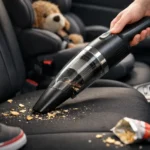
Vacuum the entire interior before using any liquid cleaner. Move the seats forward and backward to reach the carpet underneath. Use a crevice tool around the console, between seats, and under floor mats. Vacuum cloth seats, carpeted trunk panels, and the seams where crumbs and pet hair accumulate.
This step matters because dirt, food particles, and hair can continue producing odor even after you clean the visible stain. If you own a shop vacuum, use it to remove loose debris from deeper carpet fibers. A regular household vacuum can still do a good job when used slowly and methodically.
Treat Food, Drink, and Pet Accidents Properly
For a fresh drink spill, blot up as much liquid as possible with clean microfiber towels. Do not scrub hard, since that can push the spill farther into the carpet pad. Follow with an upholstery or carpet cleaner that is safe for automotive fabrics, using only enough product to treat the area.
Old food smells and pet accidents often need an enzyme cleaner. Enzymes break down organic material that standard cleaners may leave behind. Apply the product according to its instructions, allow the recommended dwell time, then blot or extract it. For a severe spill that soaked through the carpet, the padding may need extra attention. If the smell returns on hot days, residue is likely still below the surface.
Baking soda can help with mild lingering smells in dry carpet or upholstery. Sprinkle a light layer, leave it for several hours or overnight, and vacuum thoroughly. It is useful as a finishing step, not a replacement for cleaning a spill or removing the cause of a strong odor.
Clean Hard Surfaces and High-Touch Areas
Smoke residue, food oils, and body oils settle on more than just the seats. Wipe down the dashboard, steering wheel, door panels, center console, seat belt webbing, and interior glass with a vehicle-safe interior cleaner and a clean microfiber towel.
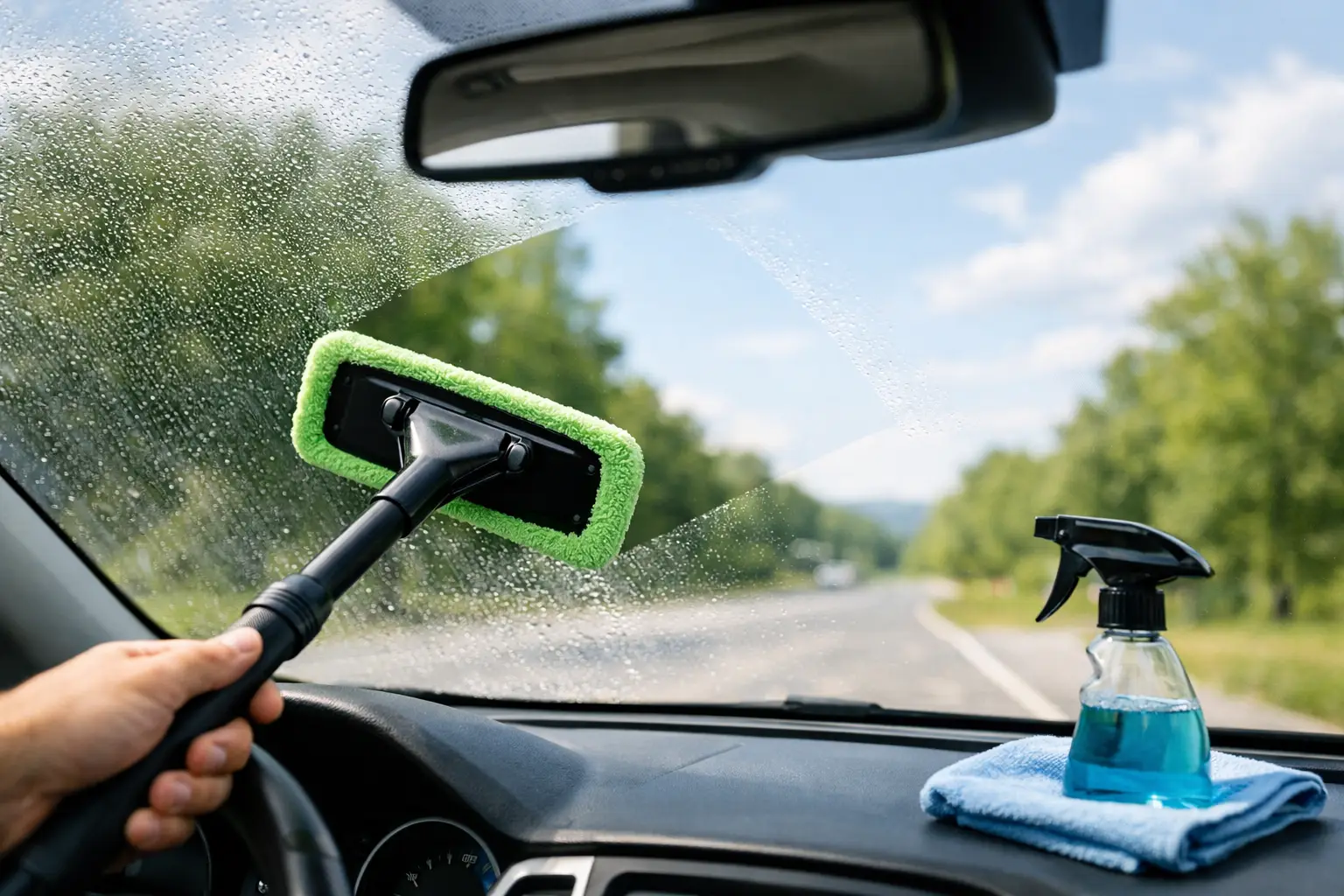
Pay particular attention to cup holders, which can hold dried soda and coffee residue, and to the inside of windows. A film on interior glass can trap smoke residue and make the cabin smell stale. Use a glass cleaner designed for automotive glass or a clean, low-residue option safe for tint if your windows are tinted.
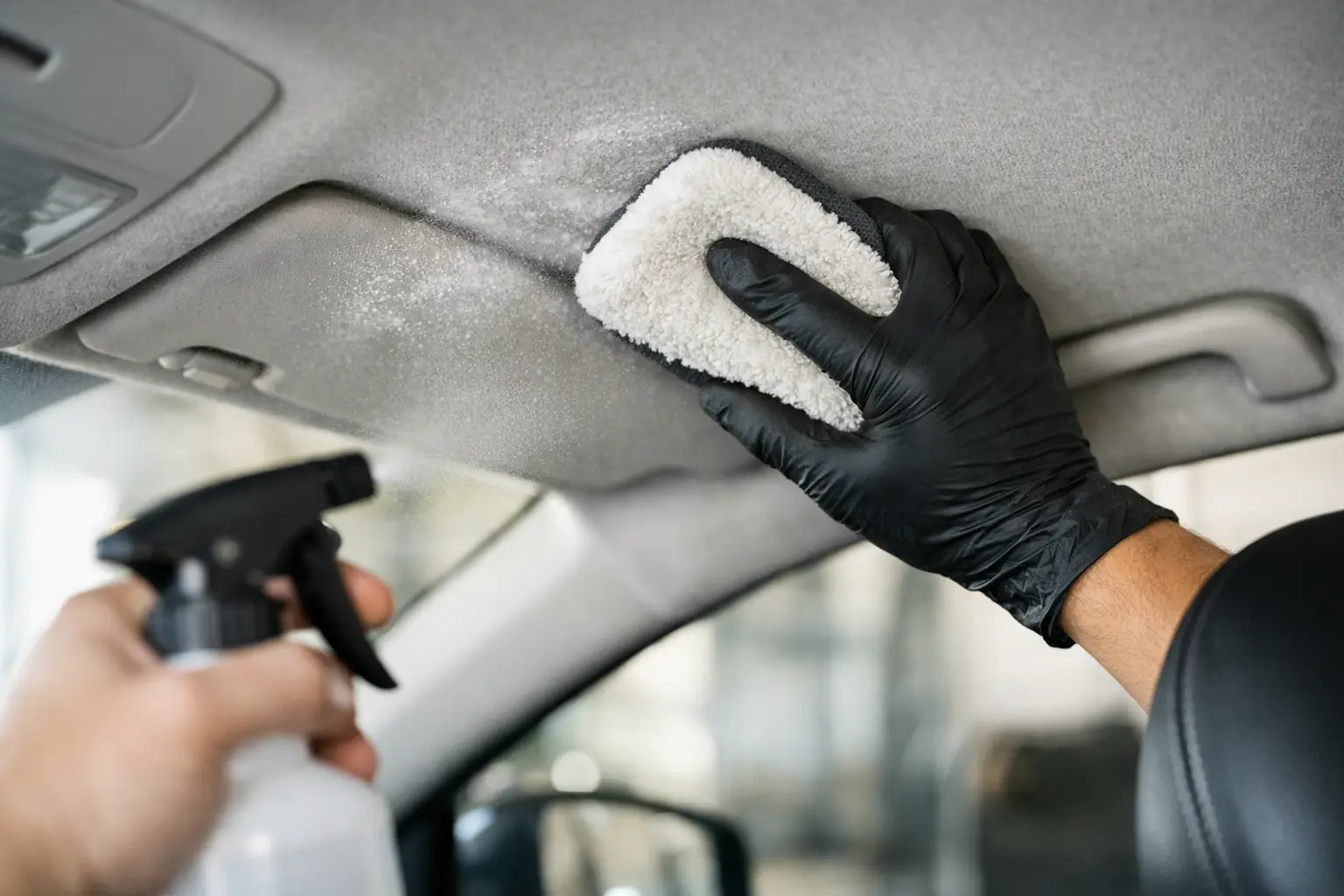
Avoid soaking switches, screens, gauge clusters, or headliners. Headliners are held up with adhesive, and too much moisture can cause the fabric to sag. For a headliner odor, lightly clean the surface with a towel rather than spraying cleaner directly overhead.
Remove Musty Smells and Moisture
A musty car is usually a damp car. Cleaning alone will not keep the smell away if water is still entering the cabin or if the carpet never fully dries.
First, feel the carpets with your hand, including the front and rear footwells. Check beneath removable floor mats, around the trunk, and near the spare tire. If you find moisture, remove the mats and dry the car as quickly as possible. Park in a dry, ventilated space when possible, open the doors for airflow, and use fans or a dehumidifier nearby if the carpet is heavily wet.
Inspect door weatherstripping for tears and clear visible debris from drain channels around the doors and trunk. A clogged sunroof drain can also send water into the headliner or footwell. If you cannot identify the leak, a shop can perform a water test before mold growth becomes a larger problem.
For light mildew odors, clean and fully dry the affected fabric, then replace the cabin air filter. For visible mold, extensive water damage, or a smell that persists after drying, professional remediation is often the better choice. Mold can hide under carpeting and inside insulation, where surface cleaners cannot reach it.
Freshen the Air Conditioning and Vent System
A dirty cabin air filter can make the air from your vents smell dusty, damp, or stale. Many vehicles make this filter accessible behind the glove box, and replacing it is usually a manageable DIY task. Check your owner’s manual for the correct filter size and access procedure.
After installing a fresh filter, clean the HVAC system with an automotive vent cleaner if needed. These products are designed to address odor-causing bacteria and moisture around the evaporator area. Use them exactly as directed, and keep the vehicle well ventilated during and after treatment.
A simple habit can also reduce recurring air-conditioning odors. A few minutes before arriving at your destination, turn off the A/C compressor while leaving the fan running. This helps dry moisture on the evaporator rather than leaving the system damp after every drive. It will not fix a major odor by itself, but it can help prevent one.
What to Do About Smoke Odor
Smoke is one of the hardest interior odors to remove because residue settles into every surface. Successful treatment usually requires more than deodorizing spray. Vacuum the interior, shampoo fabric and carpet, clean hard surfaces, wipe interior glass, and replace the cabin air filter.
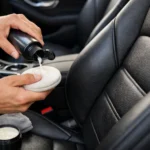
Cloth seats and headliners need careful cleaning, because smoke particles cling to fabric. Use an upholstery cleaner appropriate for the material and avoid oversaturating the seats. Leather should be cleaned with a leather-safe cleaner, then conditioned if the product instructions recommend it.
If cigarette or cigar odor remains after a full detail, an odor treatment machine may help, but use caution with ozone generators. Ozone can be harmful to breathe and may damage some interior materials when used improperly. This is one situation where a reputable detailing professional may be worth the cost, especially before selling a vehicle or after buying a smoker’s car.
Avoid Common Odor Removal Mistakes
The biggest mistake is masking odor before cleaning. Strong air fresheners can make a car smell worse by combining perfume with mildew, smoke, or old food. Choose a neutral-smelling cleaner and only add a subtle air freshener once the cabin is actually clean.
Another common mistake is using too much water on carpets and seats. Overwet fabric can create the same mildew problem you are trying to solve. Work in small sections, use towels to blot up excess cleaner, and leave doors or windows open until surfaces are dry.
Do not mix cleaning chemicals. Bleach, ammonia, vinegar, and other household products can react poorly or damage automotive materials. Stick with products labeled for the surface you are cleaning, and test any cleaner in a hidden spot first.
A clean, neutral-smelling cabin is not about making your car smell like perfume. It is about removing the spills, moisture, and residue that make every drive less comfortable. Once the source is gone, a quick vacuum, dry floor mats, and an occasional cabin filter change can keep the interior pleasant for miles to come.