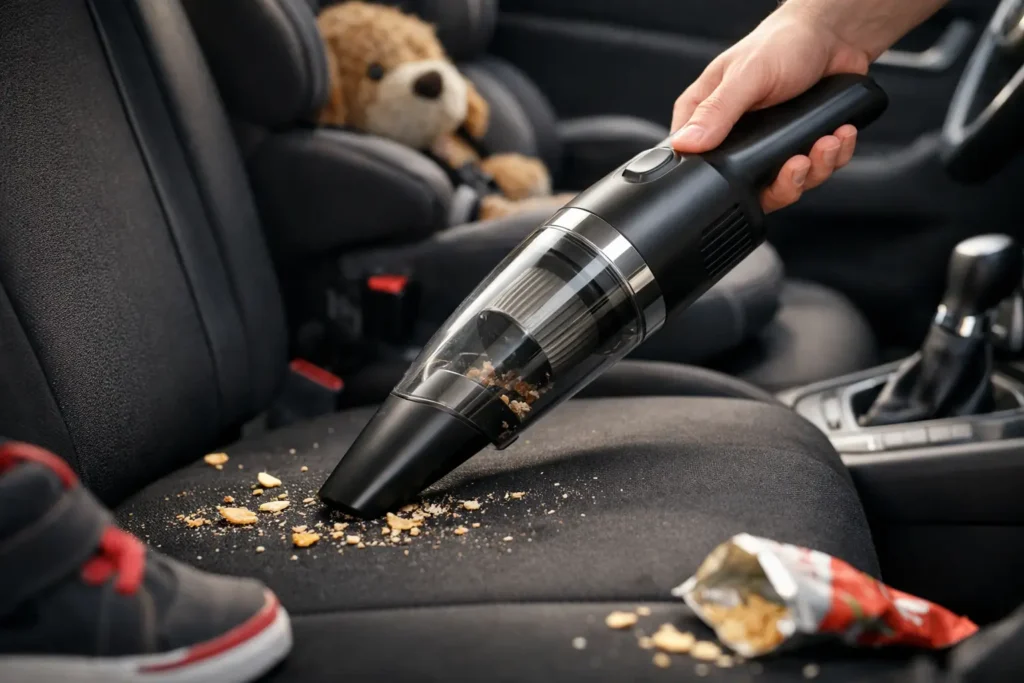

A spilled bag of snacks, sandy floor mats, and pet hair woven into the back seat can make a clean car feel impossible to maintain. The best cordless car vacuum is the one you will actually grab for those five-minute cleanups – not a bulky tool that stays buried in the garage.
For most drivers, a cordless vacuum is less about replacing a full-size shop vacuum and more about keeping everyday messes from becoming a weekend detailing project. It should fit between seats, reach under pedals, hold enough charge for a practical cleaning session, and have the right attachment for upholstery and narrow gaps.
What Makes the Best Cordless Car Vacuum?
Suction matters, but it is only one part of the decision. A powerful vacuum with a short battery life, poor filter design, or no crevice tool can be more frustrating than a slightly less powerful model that is easier to use in a vehicle.
The best choice depends on what you clean most often. A commuter who mainly deals with dust and crumbs has different needs than a parent cleaning snack debris from a third row. Pet owners need a motorized brush or a purpose-built upholstery tool, while off-road drivers and beachgoers benefit from a larger dustbin and strong airflow for sand and grit.
Suction and airflow for real car debris
Manufacturers may advertise watts, volts, air watts, or kilopascals. Those figures can be helpful, but they do not tell the whole story. Strong suction at the nozzle, a well-designed intake path, and a brush attachment often matter more than one attention-grabbing specification.
For loose dirt, crumbs, and dried leaves, most quality handheld cordless vacuums can do the job. Fine sand, embedded dog hair, and carpeted cargo areas demand more. If those are regular problems in your vehicle, look for a model with a motorized mini brush. The rotating brush loosens debris from carpet fibers and seat fabric so the vacuum can pull it in.
Battery runtime that fits your routine
Battery claims are commonly based on the lowest power setting. High-power or turbo modes can reduce runtime sharply, sometimes to 10 minutes or less. That is not necessarily a deal-breaker. Ten strong minutes can be enough for a sedan touch-up, but it may not be enough to clean a family SUV from front to back.
A realistic target is 20 to 30 minutes of usable runtime in a normal setting. If you have a larger vehicle or clean several cars, a removable battery is especially useful. You can keep a second battery charged rather than stopping halfway through a job.
Also consider charging convenience. USB-C charging is handy for compact car vacuums, while dock charging gives the tool a dedicated home. A vacuum that is easy to recharge is far more likely to be ready when you need it.
Attachments are not optional
Cars have tight spaces that household floors do not. The gap beside the seat, the tracks beneath it, door pockets, cup holders, dashboard vents, and the space around a center console all need a narrow crevice tool.
A useful cordless car vacuum should include at least a crevice tool and a soft brush. The crevice tool reaches seams and narrow channels. A soft brush is safer for dashboard plastics, screens, vents, and trim because it lifts dust without grinding grit across the surface. For fabric seats, carpet, and pet hair, a motorized brush is the attachment worth paying extra for.
Avoid buying based on attachment count alone. A pile of small accessories is not helpful if they are flimsy, difficult to store, or rarely used. Two or three well-made tools cover most interior cleaning jobs.
Choose the Right Vacuum Style for Your Car
Compact handheld vacuums
A compact handheld is the practical pick for apartment dwellers, commuters, and anyone who wants a vacuum stored in the car or a small closet. It is quick to deploy and excellent for small spills, console dust, and seat crevices.
The trade-off is bin capacity and runtime. Small handheld units may need to be emptied during a larger cleanup, and their short nozzle can make reaching beneath seats awkward. They work best as maintenance tools rather than the only vacuum you own.
Stick vacuums with handheld conversion
A cordless stick vacuum with a detachable handheld unit gives you more flexibility. Use the extension wand and floor head for cargo carpets and floor mats, then remove the wand to clean seats, door panels, and tight areas.
This style is usually the better option for households with multiple vehicles, pets, or children. It costs more and takes up more storage space, but it can also handle indoor cleaning. Just make sure the handheld section is light enough to use comfortably inside a car.
Dedicated automotive handhelds
Some cordless vacuums are designed specifically for vehicle use. They may include flexible hoses, long crevice attachments, LED lights, and compact storage cases. These features can be genuinely useful, especially in dark footwells and between tightly mounted seats.
Still, do not assume “car vacuum” means better performance. Some dedicated models are convenient but underpowered. Compare their battery runtime, filter type, accessory quality, and return policy with standard handheld vacuums before deciding.
Features Worth Paying For
A washable filter can lower long-term costs, but only if it is easy to remove and clean. Fine dust quickly reduces suction when filters are neglected, so choose a design that makes maintenance straightforward. A sealed filtration system is a plus for allergy-conscious drivers because it keeps more fine debris from escaping back into the cabin.
A transparent dustbin is another small but useful feature. You can see when it is full and check whether a lost item, such as an earring or key, was accidentally vacuumed up. Look for a bin that empties from the bottom or front without forcing you to reach inside and pull out debris.
Weight also deserves attention. A very powerful vacuum can become tiring when you are cleaning overhead, reaching across seats, or working around a large SUV. For a handheld tool, lighter is usually better as long as it still has enough capacity and suction for your needs.
LED lights are helpful, though they should not be a deciding factor. They make it easier to spot crumbs under seats and dirt along black carpet, but good attachments and dependable battery life will do more for overall results.
Common Buying Mistakes to Avoid
Do not buy the cheapest mini vacuum simply because it has a high voltage number printed on the box. Voltage alone does not guarantee suction, runtime, or build quality. Read the specifications for runtime by power mode, included attachments, bin size, and filter maintenance.
Avoid relying on a car’s 12-volt outlet as your only cleaning solution. Plug-in vacuums can work for light debris, but many lack the power needed for deep carpet cleaning. They also keep you tethered to the vehicle, which limits where and how you can clean.
It is also easy to overestimate how often you need maximum power. Turbo mode is useful for ground-in sand and pet hair, but using it for every pass drains the battery quickly. Start on the standard setting for loose dirt, then use higher power only where it makes a visible difference.
Finally, do not vacuum wet spills unless the vacuum is specifically rated for wet and dry use. Standard cordless vacuums are designed for dry debris. Vacuuming liquids can damage the motor, clog the filter, and create an unpleasant odor inside the machine.
How to Get Better Results From a Cordless Vacuum
Remove trash and larger items first. This prevents wrappers, coins, and small objects from blocking the nozzle or getting trapped in the brush. Take out the floor mats and shake them outdoors before vacuuming them separately.
Work from the top of the cabin down. Dust the dash and vents first, then clean seats, door pockets, center console areas, and finally the floor. Use the crevice tool around seat rails and under the front seats, where dirt collects unnoticed. If you are tackling pet hair, make slow passes with the motorized brush rather than rushing over the same area repeatedly.
Empty the dustbin before it reaches the fill line and clean the filter according to the manufacturer’s instructions. A vacuum that suddenly seems weak often does not need replacing – it needs an emptied bin, a cleared brush roll, or a clean, fully dry filter.
The right cordless vacuum turns interior care into a small habit instead of an all-day chore. Keep it charged, store its crevice tool with it, and use it after the mess happens. Your car will stay more comfortable, and the next full detail will take far less work.