
The clear coat on a modern vehicle is thin, and it takes daily abuse long before the paint itself looks obviously damaged. Sun, road grit, bird droppings, tree sap, automatic car washes, and careless parking all leave a mark over time. Good paint protection will not make a car indestructible, but it can make cleaning easier, reduce long-term wear, and help the finish look better when it is time to sell or trade in.
The right choice depends less on marketing claims and more on how you use your vehicle. A garage-kept weekend car has different needs than a commuter parked outside eight hours a day. Your budget, willingness to wash the car properly, and concern about rock chips should guide the decision.
What Paint Protection Is Actually Protecting
Automotive paint is usually made up of several layers: primer, color coat, and a clear protective topcoat. The clear coat provides gloss and gives the color underneath its depth, but it is still vulnerable to ultraviolet rays, chemical contamination, scratches, and abrasion.
Most paint protection products sit on top of that clear coat. They create a sacrificial barrier that takes some of the damage instead of leaving it directly in the finish. Depending on the product, that barrier may improve water beading, make bug residue easier to remove, resist chemical stains, or reduce fine wash scratching.
It helps to set realistic expectations. No wax, sealant, or ceramic coating prevents a sharp rock from chipping paint. No product eliminates the need to wash a vehicle. And even paint protection film has limits when it meets a hard impact or deep scrape. The value is in reducing routine damage and making maintenance more manageable, not in promising a permanently flawless car.
The Main Types of Paint Protection
Wax offers simple, short-term protection
Traditional car wax, whether natural carnauba or a blended formula, is an easy entry point for most owners. It adds gloss, helps water roll off the surface, and provides a modest barrier against dirt and contamination. For a vehicle that is washed regularly and stored indoors much of the time, wax can be enough.
The trade-off is durability. Depending on the product, weather, and wash habits, wax may last only a few weeks to a few months. It is a good choice for owners who enjoy detailing and do not mind reapplying protection several times a year. It is less appealing for someone seeking a low-maintenance solution.
Synthetic sealants last longer than wax
Paint sealants are synthetic products designed to bond more durably to the paint than traditional wax. They tend to give a clean, glossy look and commonly last several months when applied to properly prepared paint.
For many budget-conscious car owners, a sealant is the practical middle ground. It costs less than a coating, is usually manageable for a careful DIYer, and provides better longevity than basic wax. It will still wear down, especially on a vehicle that lives outside, but it offers reliable protection without a major investment.
Ceramic coatings prioritize durability and easier cleaning
Ceramic coatings use silicon-based chemistry to form a more durable protective layer on the clear coat. Once cured, they can improve water behavior, make contamination less likely to stick, and offer stronger resistance to UV exposure and chemical staining than wax or a typical sealant.
A coating is not a force field. It can still scratch, water spots can still form, and neglected washing can still damage the finish. The biggest day-to-day benefit is often easier cleaning. Dirt and road film tend to release more readily when the coating is maintained correctly.
DIY ceramic products vary widely in strength and ease of use. Some are designed for beginners, while others require careful panel prep, precise application, and controlled curing conditions. Professional-grade coatings may last longer, but the labor and paint correction involved can make them expensive. If the car has visible swirls, oxidation, or scratches, applying a coating over those flaws may lock them in visually rather than hide them.
Paint protection film is the best defense against chips
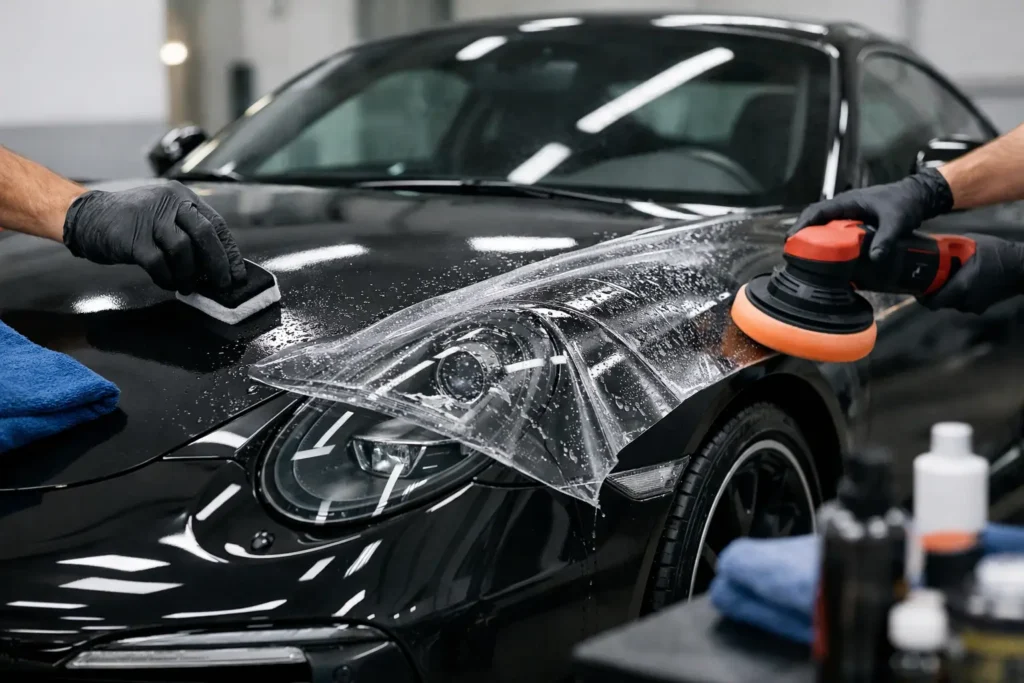
Paint protection film, often called PPF, is a clear urethane film applied over painted panels. It is the strongest option for guarding against rock chips, road debris, light scuffs, and abrasion. Many modern films also have self-healing properties, meaning fine scratches can fade with heat from the sun or warm water.
PPF makes the most sense on high-impact areas. The front bumper, hood leading edge, mirrors, rocker panels, and areas behind the wheels take the harshest abuse. Covering only those locations can be more cost-effective than wrapping an entire vehicle.
Film is also the least forgiving DIY option. Proper installation requires surface prep, slip solution, precise positioning, and experience working around curves and panel edges. A poor installation can show trapped debris, lifted edges, or visible stretch marks. For most owners, professionally installed film is worth considering when chip prevention is the primary goal.
Paint Protection Starts With Surface Preparation
The best product will disappoint if it is applied over a dirty or contaminated surface. Washing removes loose dirt, but bonded contamination such as rail dust, industrial fallout, and embedded brake particles can remain on the paint. These particles make the surface feel rough and can interfere with how a protectant bonds.
Start with a thorough wash using a pH-balanced car shampoo, clean microfiber wash mitts, and the two-bucket method or a similar process that minimizes grit being dragged across the paint. Dry the vehicle with quality microfiber towels rather than old bath towels or paper products.
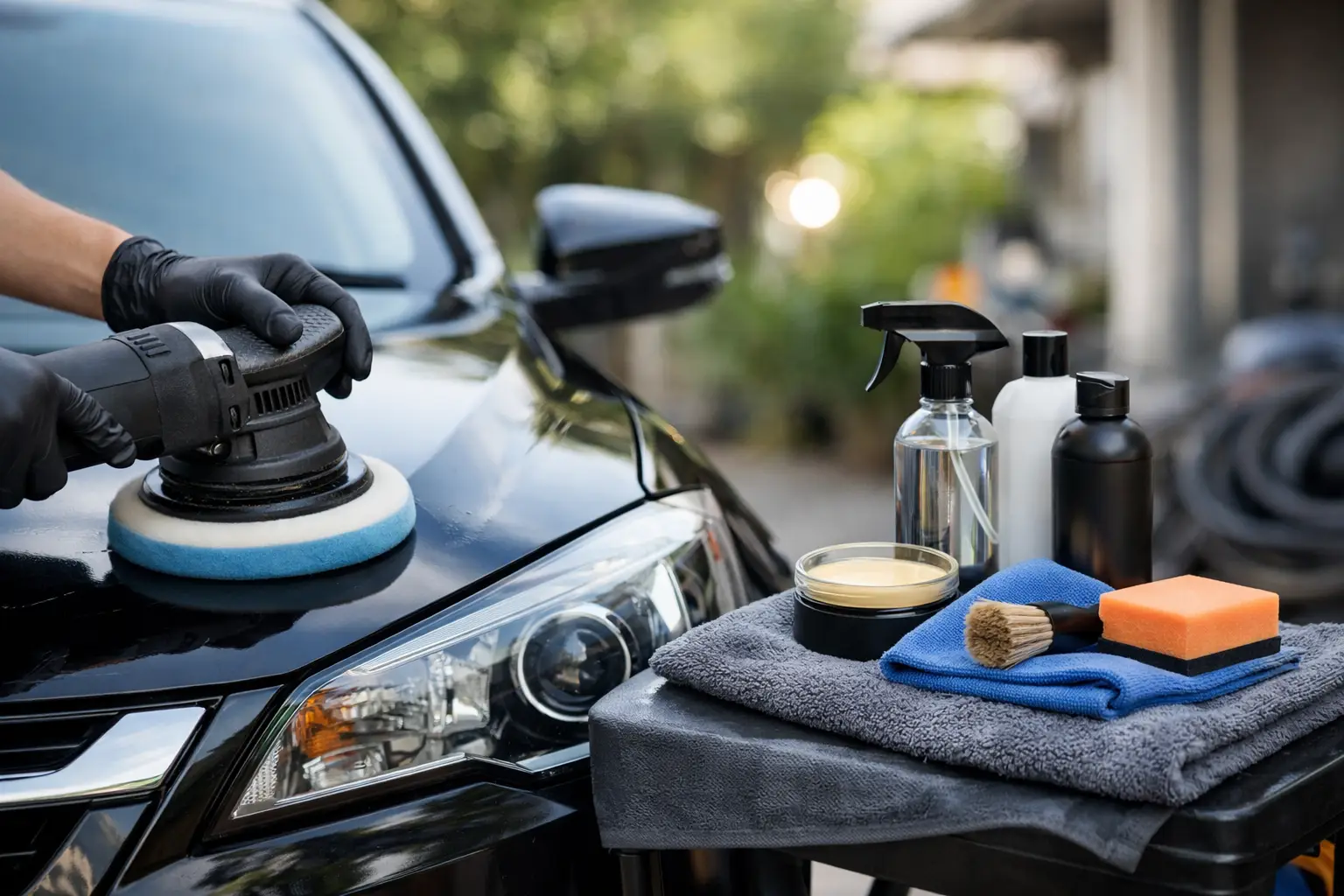
If the paint feels rough after washing, a clay bar or synthetic clay towel can remove bonded contaminants. Follow with a chemical decontamination product if needed. For vehicles with swirls or dullness, polishing before applying a sealant or coating is often the step that produces the biggest visual improvement.
Do not rush this stage. A clean, cool, dry surface is more important than applying the most expensive product available. Work out of direct sunlight when possible, and follow the product instructions for cure times and panel temperatures.
Match Paint Protection to Your Real Driving Habits
A new daily driver that spends time on highways is a strong candidate for PPF on the front end, followed by a sealant or ceramic coating on the remaining painted surfaces. The film handles the impact risk, while the coating or sealant improves routine maintenance.
For an older commuter with decent but imperfect paint, a good wash, decontamination, light polish, and durable sealant may offer the best return. Spending thousands on film or professional coating work is not always sensible if the vehicle’s age, mileage, or condition does not justify it.
If you lease a vehicle, protection should be proportionate to the lease term and expected use. A sealant or consumer-friendly coating can help keep the car presentable without spending heavily on a long-term treatment you may not fully benefit from.
For enthusiasts, dark-colored vehicles, or cars you plan to keep for years, more extensive correction, ceramic coating, and targeted film can be a worthwhile investment. Dark paint shows wash marring and water spots more easily, so careful maintenance matters just as much as the protective product itself.
Common Paint Protection Mistakes
The most common mistake is treating protection as a substitute for proper washing. Running a coated car through a brush-style automatic wash can quickly add fine scratches and reduce the finish’s clarity. Touchless washes are gentler, though they may use stronger chemicals and do not always remove heavy grime completely.
Another mistake is applying layers without checking compatibility. Wax applied over a ceramic coating may reduce the coating’s water behavior, while a coating applied over old wax or oily residue may not bond correctly. Use the prep products recommended by the manufacturer and keep the process simple.
Owners also often overlook contamination. Bird droppings, bug splatter, and tree sap should be removed as soon as practical, even from a protected vehicle. Heat and sunlight can bake these materials onto the surface and cause etching that no spray detailer can fix.
Finally, avoid judging performance by water beading alone. Beading can look impressive, but tight beads can leave concentrated mineral deposits behind as they dry. If you live in an area with hard water, drying the vehicle promptly is often more valuable than chasing the most dramatic beading effect.
Keep the Protection Working
Once paint protection is in place, maintenance should be straightforward. Wash regularly before dirt builds up, use clean tools, and avoid harsh household cleaners. A ceramic-coated vehicle may benefit from a coating-safe maintenance spray, while waxed and sealed vehicles need periodic reapplication based on how the paint looks and behaves.
Inspect the finish a few times a year under good lighting. If water no longer sheets or beads as it once did, the surface may simply need cleaning or decontamination rather than immediate replacement. If film edges begin lifting or the paint develops deeper scratches, address the issue early before dirt and moisture create a larger problem.
The most useful paint protection is the one you can maintain consistently. Choose a level of protection that fits your vehicle, your driving conditions, and the time you are realistically willing to spend caring for it. A clean car with a properly applied sealant and careful wash habits will often look better for longer than a neglected car wearing the most expensive coating available.