
A single scratch can make an otherwise clean vehicle look neglected, especially when sunlight hits the paint at the right angle. The good news is that most everyday damage is avoidable. Learning how to prevent car paint scratches comes down to changing a few routines: how you wash, where you park, what you keep near the vehicle, and how quickly you deal with contaminants.
Paint is tougher than it looks, but it is not invincible. Clear coat protects the color underneath, yet dust, grit, branches, shopping carts, and poor washing habits can all leave visible marks. Protecting that finish helps your car look better now and can support resale value later.
Start With a Scratch-Safe Wash Routine
Washing is one of the most common ways owners accidentally create fine scratches and swirl marks. The problem is rarely the water or soap itself. It is the dirt trapped between a towel, mitt, or sponge and the paint.
Never dry-wipe a dusty vehicle, even if it only needs a quick cleanup before work. Fine dust often contains sand, road grit, and brake dust. Dragging it across the clear coat can create a web of light scratches that becomes obvious under direct light.
A safer wash starts by rinsing the vehicle thoroughly. Use a steady stream of water to remove loose dirt from the roof, hood, trunk, and lower panels before touching the paint. Then wash with a clean microfiber mitt and a car-specific soap. Household dish soap may strip wax or sealant and can leave the paint less protected over time.
The two-bucket method is useful for owners who wash at home. Fill one bucket with soapy water and the other with clean rinse water. After cleaning a section, rinse the mitt in the clean bucket before loading it with soap again. This reduces the odds of putting grit back onto the paint.
Work from the top down because lower body panels, rocker panels, and bumpers collect the heaviest grime. Clean wheels and tires with separate brushes, towels, and buckets. A wheel brush that has touched brake dust and road debris should never be used on painted surfaces.
Dry the vehicle with clean, high-quality microfiber drying towels rather than an old bath towel, T-shirt, or chamois. Blot or gently pull the towel across the surface without pressure. If a towel falls on the ground, set it aside for washing. It may have picked up debris that can scratch the paint.
Use Protection to Prevent Car Paint Scratches
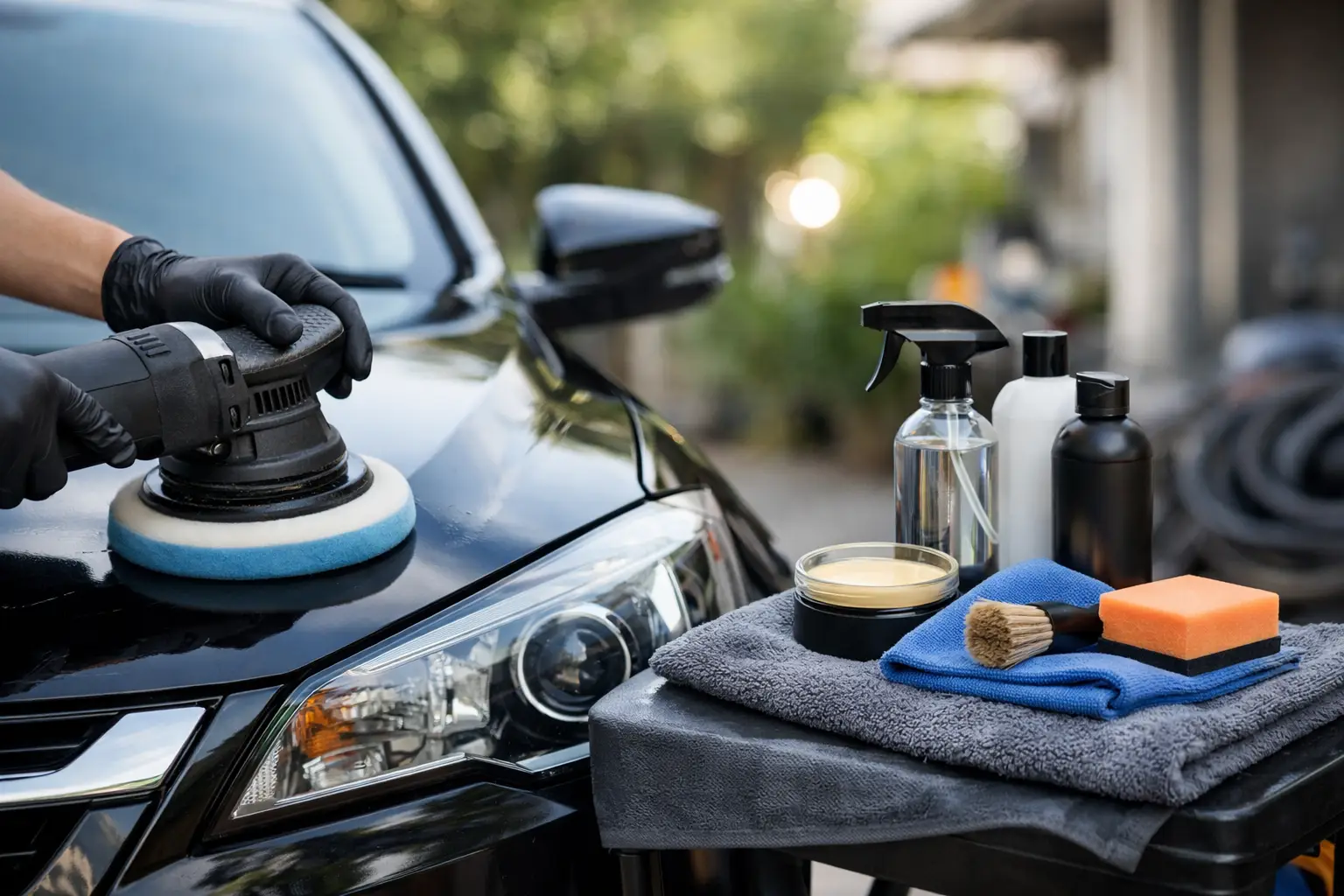
Wax, paint sealant, and ceramic coatings will not stop a sharp key or a hard impact. They can, however, reduce friction and make it easier to wash away light dirt before it grinds into the finish. They also add gloss, which makes a well-maintained car look noticeably better.
Traditional car wax is a practical option for many DIY owners. It provides a warm shine and water beading, but it needs regular reapplication. Synthetic paint sealants typically last longer and may be a better choice for a daily driver that sits outside. Ceramic spray protectants are also easy to apply and offer good water behavior with less effort than a full ceramic coating.
For vehicles that face frequent highway driving, tight parking lots, or harsh weather, paint protection film can be worth considering on high-impact areas. The front bumper, hood edge, mirrors, door cups, and rear wheel arches are common locations. Film costs more than wax or a spray protectant, but it provides physical protection against rock chips and light abrasion.
The right option depends on your budget and expectations. A basic spray sealant applied a few times a year is far better than leaving the paint unprotected. A professional-grade coating or paint protection film makes more sense for a newer vehicle you plan to keep for years.
Park With More Space Than You Think You Need
Many deep scratches happen when the car is parked, not while it is being driven. Choosing where and how you park can prevent a surprising amount of damage.
When possible, avoid squeezing into the narrowest open space near a busy store entrance. A longer walk is usually cheaper than repairing a door ding or scrape. Park near the center of your space, leaving enough room on both sides for neighboring doors to open. If you have the choice, park beside a curb, landscaped island, or an end space where only one vehicle is beside you.
Be cautious around loose shopping carts, especially on sloped lots and windy days. Do not assume a cart return area will contain every cart. At home, leave enough room in the garage to open doors without rubbing against bicycles, shelves, tools, or storage bins.
Trees offer shade, but the trade-off can be sap, falling twigs, bird droppings, and branches rubbing against the paint. If you park under a tree regularly, inspect the vehicle more often and remove contaminants promptly. A covered parking space or garage is ideal, but careful outdoor parking still makes a meaningful difference.
Watch the Small Habits That Cause Big Marks
Some of the most frustrating scratches come from ordinary moments. Leaning a bag, box, or jacket with metal hardware against the car can scuff the clear coat. Setting keys on the hood while unloading groceries can do the same. Avoid placing anything on painted panels, even briefly.
Be careful when clearing snow or ice. A cheap scraper, a stiff broom, or a dirty snow brush can leave fine marks behind. Use a soft snow brush designed for automotive paint, and let the defroster loosen ice when possible rather than aggressively scraping close to the body panels.
Automatic car washes deserve a realistic assessment. Touchless washes are generally safer for paint because nothing physically rubs the vehicle, although they may not clean heavy grime as thoroughly. Tunnel washes with spinning brushes are convenient, but worn or dirty brushes can create swirl marks. A well-maintained soft-touch wash may be acceptable for some owners, but hand washing remains the safest choice when preserving the finish is a priority.
Keep microfiber towels clean, too. Wash them separately from household laundry using a mild detergent without fabric softener. Fabric softener can reduce absorbency, while lint and debris from other laundry can make towels less paint-safe.
Remove Harmful Contaminants Quickly
Bird droppings, bug splatter, tree sap, and road tar do more than make a car look dirty. Some can bond to or etch into the clear coat, particularly when the vehicle sits in sun and heat. The longer they remain, the more likely they are to require polishing or professional correction.
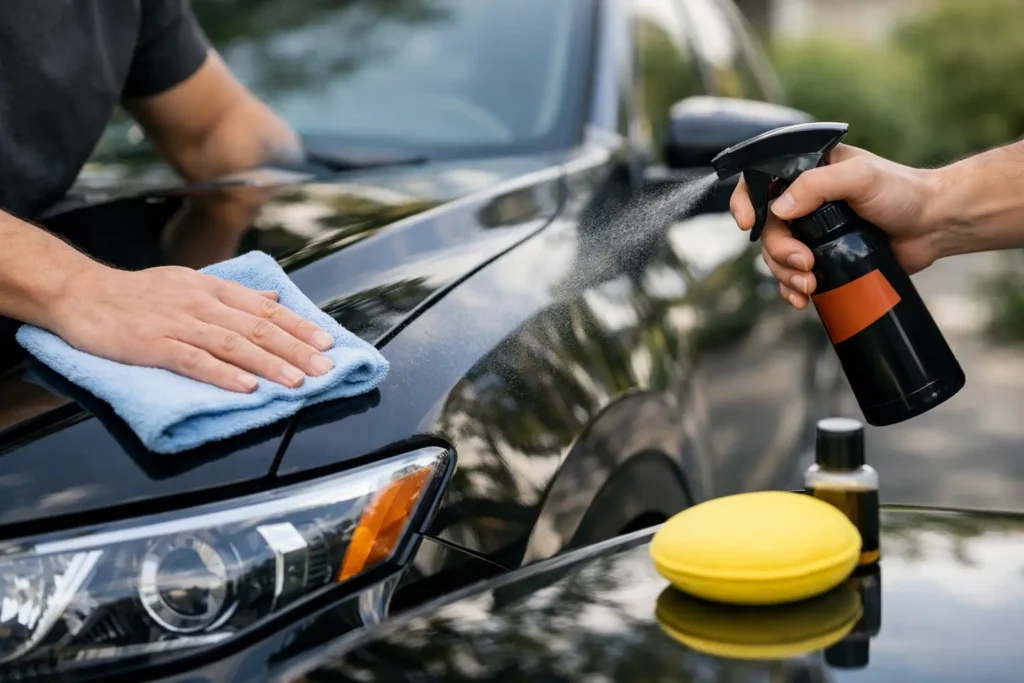
Keep a small bottle of detailing spray and a few clean microfiber towels in the trunk. When you spot fresh droppings or sap, saturate the area first, let the product loosen the contamination, and then lift it away gently. Do not scrub a dry spot with a paper towel or your sleeve.
Gas station squeegees should also stay away from painted panels. They are meant for glass and often hold grit from previous use. The same applies to rough paper towels, which can scratch or dull clear coat when used with pressure.
Address Light Scratches Before They Worsen
Not every scratch means a body shop visit. If a mark disappears or becomes less visible when wet, it is often in the clear coat and may be correctable with a light polish. If you can catch a fingernail in the scratch, the damage may be deeper and could need touch-up paint or professional repair.
Before using any scratch remover, wash and dry the area thoroughly. Test the product on a small section, use a soft applicator, and follow the instructions closely. Aggressive rubbing can remove more clear coat than intended. For deep scratches that expose primer or bare metal, address them quickly to reduce the risk of corrosion.
A clean car is easier to inspect, so regular washing gives you a chance to catch small problems early. It also makes it easier to see whether a scratch is new, spreading, or simply residue transferred from another object.
Your paint does not need a perfect, expensive routine to stay in good shape. A careful wash, a protective layer, cleaner towels, and smarter parking choices will prevent far more damage than most owners expect. Treat the finish like the visible protective surface it is, and those small daily decisions will keep your vehicle looking cared for mile after mile.