
A weak blast from the vents, a musty smell after the A/C starts, or a windshield that takes forever to clear can all point to one small, often forgotten part: the cabin air filter. If you are wondering when your cabin filter should change, a good starting point is every 15,000 to 30,000 miles, but your driving conditions matter just as much as the odometer.
The cabin air filter cleans the air entering the passenger compartment through the heating, ventilation, and air conditioning system. It captures dust, pollen, road grime, soot, leaves, and other airborne debris before they reach the vents and the air you breathe. Replacing it is usually an affordable DIY job, and staying ahead of it can make daily driving noticeably more comfortable.
When Should You Change Your Cabin Filter?
Most vehicle manufacturers recommend replacing the cabin air filter at a set mileage or time interval. For many cars, that falls between 15,000 and 30,000 miles, or about once per year. Your owner’s manual is the best source for the exact interval for your vehicle.
That recommendation is a baseline, not a rule that fits every driver. A car used mostly on clean highways in a mild climate may be fine at the longer end of the range. A commuter that deals with city traffic, unpaved roads, construction zones, wildfire smoke, or heavy pollen can need a new filter much sooner.
A practical routine is to inspect the filter at every oil change or at least twice a year. You do not have to replace a filter just because it looks slightly gray. But if the pleats are packed with dirt, leaves, or insect debris, or if airflow has dropped, replacement is usually the better call.
Signs Your Cabin Air Filter Needs Replacement
Mileage is useful, but the car often gives you more immediate clues. The most common sign is reduced airflow through the vents. If the fan sounds normal at a higher setting but the air coming out feels weak, a clogged filter may be restricting the system.
A stale, dusty, or musty odor is another reason to inspect it. The filter itself can collect moisture and organic debris, especially when leaves get into the outside air intake. Keep in mind that a persistent mildew smell may also come from the A/C evaporator, so a fresh filter may improve the problem without completely curing it.
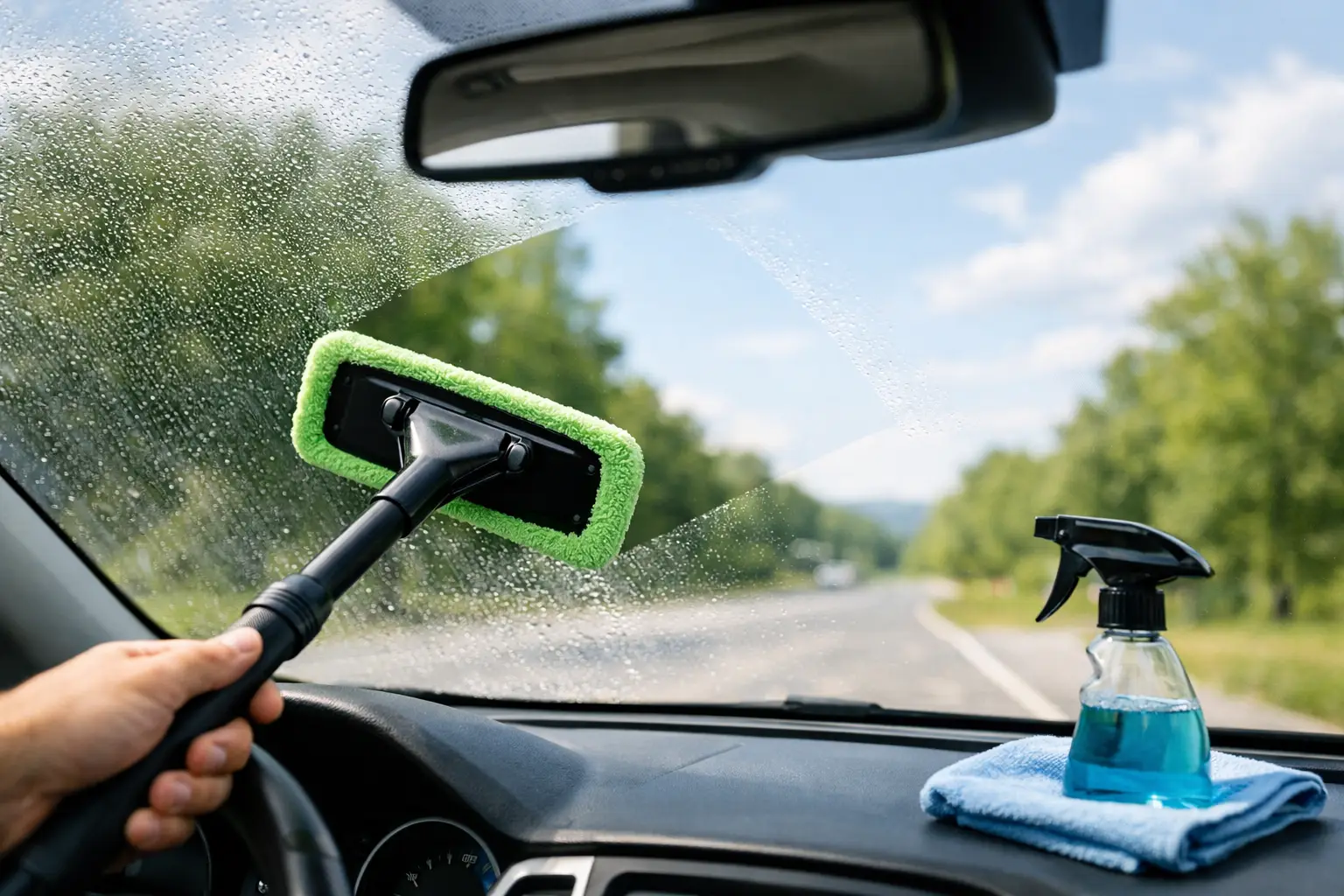
Fogging windows can be another clue. Your defroster depends on steady airflow to clear moisture from the glass. A dirty cabin filter cannot cause every fogging issue, but it can make the defroster less effective and increase the time it takes for the windshield to clear.
People with allergies may notice the problem before anyone else. More sneezing, itchy eyes, or dust entering the cabin during pollen season can mean the filter has reached the end of its useful life. A clean filter will not make a vehicle airtight, but it does give the HVAC system a better chance of reducing airborne particles.
Driving Conditions That Shorten Filter Life
The same filter can last 30,000 miles in one car and struggle after 10,000 miles in another. It depends on what the vehicle encounters.
Drivers in dusty or rural areas often need shorter replacement intervals because fine dirt quickly fills the filter media. The same is true for vehicles regularly parked under trees, where seeds, leaves, and organic debris can enter the cowl intake near the windshield.
Heavy urban traffic is hard on cabin filters too. Exhaust soot and brake dust are common in stop-and-go commuting. In regions affected by wildfire smoke, checking the cabin filter after the worst smoke has passed is a smart precaution. Smoke particles can load a filter quickly, and an overdue filter may leave the interior smelling stale even after the outside air improves.
If you drive through high-pollen seasons, plan on checking the filter before and after spring. Pet owners may also want to inspect it more often, particularly if pet hair and dander regularly make their way into the cabin.
What Happens If You Wait Too Long?
A neglected cabin air filter usually will not cause sudden engine damage. It is not the same as the engine air filter, which protects the engine’s intake system. Still, delaying replacement can affect your comfort, visibility, and HVAC performance.
As debris builds up, the blower motor has to work harder to push air through the filter. You may use higher fan settings more often and still get weaker heating or cooling from the vents. That does not necessarily mean the blower motor will fail, but it adds unnecessary strain to a system that works best with free airflow.
The bigger everyday issue is interior air quality. A dirty filter can hold dust, pollen, and moisture, then contribute to unpleasant odors each time you run the fan. For a family vehicle, a daily commuter, or a car used for ridesharing, that is a small maintenance task with a meaningful payoff.
How to Check the Cabin Air Filter Yourself
On many vehicles, the cabin air filter sits behind the glove box. Others place it under the dashboard, near the center console, or under a panel at the base of the windshield. Check the owner’s manual before taking anything apart, since access points and panel clips vary by model.
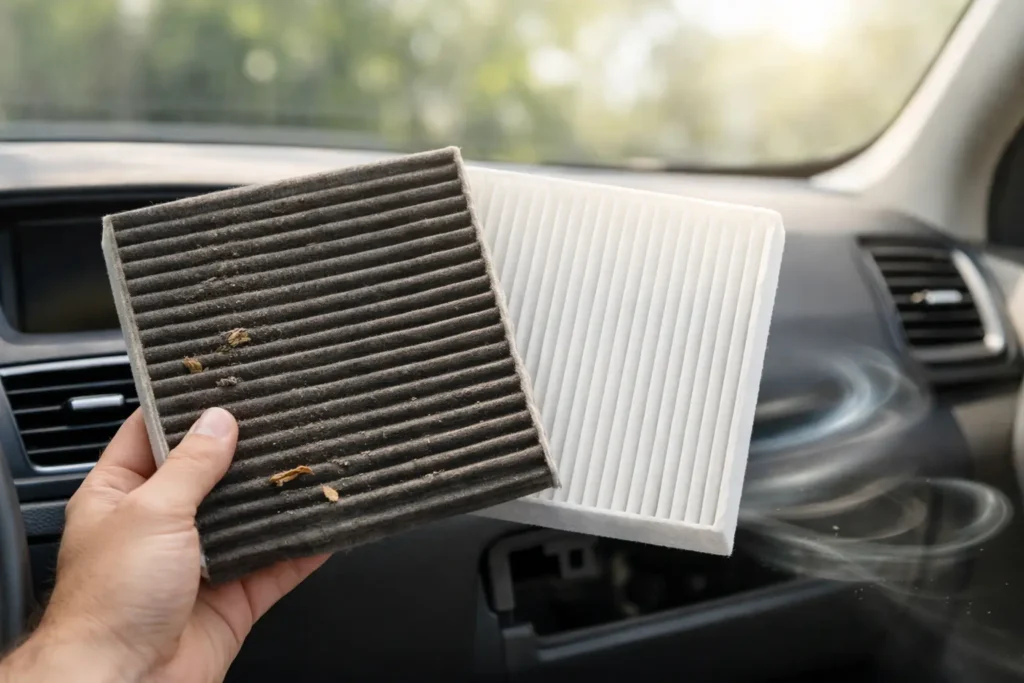
With the vehicle off, remove the filter cover carefully and slide the old filter out. Look for a layer of dirt across the pleats, leaves caught at the edges, dark soot, tears, or any sign of moisture. A light amount of dust is normal. A filter that is dark, matted, damp, or visibly blocked should be replaced.
Before installing the new one, clear loose leaves or debris from the filter housing with a vacuum or a dry cloth. Do not force anything into the HVAC box. Then check the airflow arrow printed on the new filter. That arrow must point in the direction specified for your vehicle, often downward on glove-box-mounted filters. Installing it backward can reduce performance and may cause the filter to bend or make noise.
Choosing the Right Replacement Filter
A standard particulate filter is enough for many drivers. It captures common dust and pollen while keeping cost low. If you regularly deal with exhaust odor, smoke, or city pollution, a charcoal or activated-carbon cabin filter can be worth the extra cost. Its added layer helps absorb some odors and gaseous contaminants.
Higher-priced filters are not automatically better for every situation. The key is buying the correct size, using a reputable replacement part, and changing it on schedule. A premium filter left in place for years is less helpful than a basic filter replaced when it is dirty.
Avoid trying to wash and reuse a standard paper cabin filter. Water can damage the filter media and weaken its shape. Gently tapping out loose debris may help you inspect it, but it is not a substitute for replacement when the filter is loaded with dirt.
A Simple Maintenance Schedule That Works
For most owners, checking the cabin filter every six months and replacing it annually is an easy plan to remember. If you have low annual mileage and drive in clean conditions, inspect it at one year and replace it only if needed. If your driving involves dust, smoke, dense traffic, or severe allergy seasons, replacing it every 10,000 to 15,000 miles may be more realistic.
Write the replacement date and mileage in your maintenance notes, just as you would for an oil change. That small habit prevents the filter from becoming an out-of-sight, out-of-mind item. A clean cabin filter will not solve every HVAC problem, but it is one of the simplest ways to keep your car feeling fresher, clearer, and more pleasant every time you get behind the wheel.