
A car that was fine yesterday but will not start this morning creates an immediate problem: are you dealing with a worn-out battery, a light left on, or something more expensive? Understanding why car battery dies helps you avoid guesswork and decide whether a simple charge, a battery replacement, or a repair is the right next move.
A battery does more than start the engine. It supplies the initial burst of power for the starter and supports electrical systems when the engine is off. Once the engine runs, the alternator should recharge the battery and power the vehicle’s electrical needs. When either side of that relationship fails, you can end up stranded.
Why Car Battery Dies: The Most Common Reasons
The most common reason is age. Most conventional car batteries last about three to five years, although climate, driving habits, and battery quality can shorten or extend that range. A battery can appear to work normally until its remaining capacity drops below what the starter needs, especially on a cold morning.
Heat is particularly tough on batteries. High temperatures speed up chemical wear inside the case and can cause battery fluid to evaporate. Cold weather creates a different problem: it reduces the battery’s available power while making the engine harder to crank. A marginal battery that starts a car in mild weather may fail when temperatures drop.
Short, frequent trips can also leave a battery undercharged. Starting an engine uses a significant amount of electricity. If you drive only a few minutes at a time, the alternator may not have enough time to replace that energy fully. Over weeks or months, the battery can remain partially discharged, which reduces its life.
Leaving accessories on is another familiar cause. Headlights, interior lights, trunk lights, phone chargers, dash cameras, and aftermarket stereos can drain a battery when the engine is off. Modern vehicles may turn some systems off automatically, but do not assume every accessory is protected. A door or trunk that does not latch completely can keep a light on long after you walk away.
A parasitic drain is similar, but harder to spot. This is an electrical component that continues drawing more power than it should after the vehicle has shut down. A faulty module, relay, alarm system, or accessory installation can cause it. Small normal draws are expected because the clock, security system, and computer memory need power. The issue is excessive draw that empties the battery over a day or two.
A Dead Battery Is Not Always a Bad Battery
A jump-start can get you moving, but it does not identify the underlying fault. If the car starts after a jump and then dies again soon afterward, the alternator, drive belt, wiring, or battery connections deserve attention.
The alternator recharges the battery while the engine runs. If it is failing, the battery may gradually lose charge even during normal driving. Warning signs can include a battery warning light, dimming headlights, flickering dashboard lights, electrical accessories behaving oddly, or a burning smell from a slipping belt. These symptoms can overlap with battery trouble, so testing matters more than guessing.
Loose or corroded battery terminals can cause a no-start condition even when the battery itself is healthy. Look for white, blue, or greenish buildup around the terminals, along with damaged cables or clamps that can move by hand. Corrosion increases electrical resistance, which limits the current reaching the starter. Cleaning the terminals carefully and tightening the connections may restore reliable starting, but wear gloves and eye protection because battery residue is corrosive.
The starter can also be the culprit. If the dashboard lights come on brightly but you hear one heavy click or repeated clicks when turning the key, the battery may be weak, the connections may be poor, or the starter may be failing. A battery test and charging-system test help separate these possibilities.
How to Tell What Is Draining Your Battery
Start with the pattern. A battery that dies after the car sits for several days may be aging, undercharged, or affected by a parasitic draw. A battery that dies immediately after an overnight stop points more strongly to an accessory left on, a light, or an electrical issue. A battery that dies while driving points toward an alternator or charging-system problem.
Check the battery’s age code or installation date. If it is already four or five years old, replacement may be more sensible than repeatedly charging it. A charger can restore a discharged battery, but it cannot reverse normal internal wear.
Next, inspect the basics with the engine off. Make sure the terminals are clean and secure, check that the battery case is not swollen or cracked, and look for any signs of leaking. A swollen battery should be replaced promptly. Do not try to force it into a charger or continue using it.
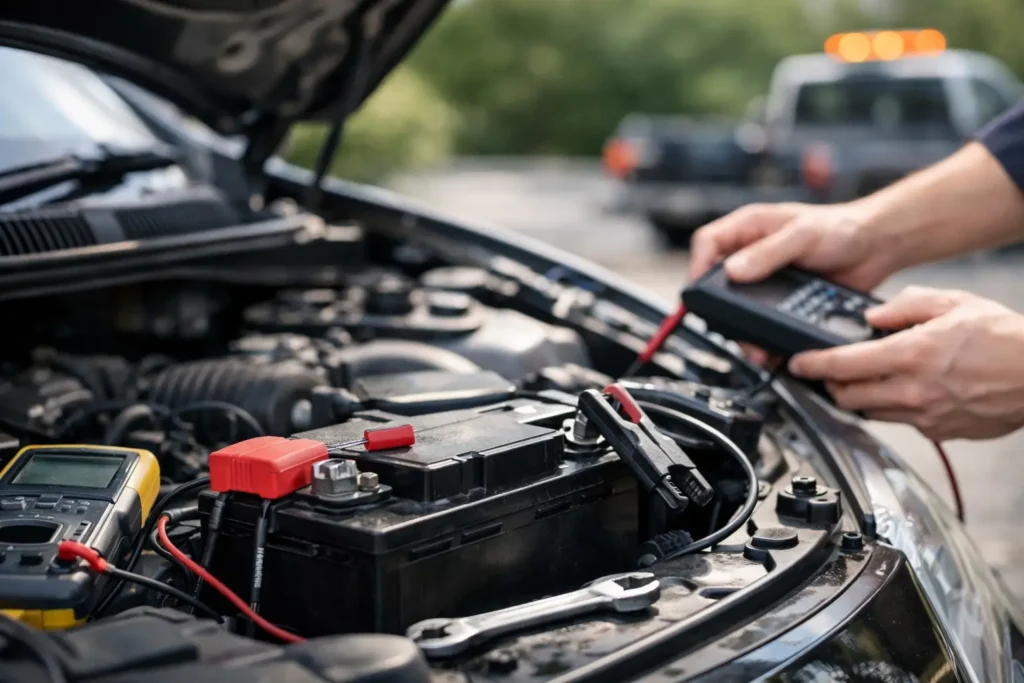
Many auto parts stores can test a battery and charging system, often at no cost. A proper load test measures whether the battery can deliver power under demand, which is more useful than simply seeing a normal voltage reading. A resting battery may show close to 12.6 volts and still fail a load test because it lacks usable capacity.
If the battery and alternator test well but the battery repeatedly dies while parked, a professional parasitic-draw test is often worth the cost. Diagnosing that problem can involve measuring current after the vehicle’s systems enter sleep mode, then isolating circuits one at a time. Pulling fuses without a method can create new issues or erase settings, so this is one job where targeted diagnosis saves time.
What to Do When Your Car Will Not Start
If you need to jump-start the vehicle, use jumper cables or a jump pack according to the vehicle owner’s manual. Connect the positive terminals first, then connect the final negative clamp to a solid, unpainted metal ground point on the disabled vehicle if the manual directs it. Keep cables away from belts, fans, and moving parts.
After the engine starts, do not assume a short drive has fixed the battery. Drive long enough for normal charging, then arrange a battery and charging-system test as soon as practical. If the car needs another jump later that day or the next morning, avoid relying on it for essential travel until you know the cause.
Do not jump-start a battery that is cracked, leaking, badly swollen, or frozen. Those conditions can be hazardous. Call for assistance or have the vehicle towed instead.
Simple Habits That Help a Battery Last Longer
Battery care is not complicated, but consistency pays off. Turn off lights and accessories before leaving the car, and make a quick habit of checking that doors, the trunk, and the glove box are fully closed. If you use a dash camera, portable refrigerator, or other accessory with parking mode, understand how it draws power and whether it has a low-voltage cutoff.
For vehicles that sit for long periods, a battery maintainer can keep the battery at a healthy charge without overcharging it, provided it is used as directed. This is especially helpful for a weekend vehicle, seasonal car, or a car driven only on short errands. If your battery has removable caps, follow the manufacturer’s guidance rather than adding water automatically; many modern batteries are maintenance-free.
Keep the top of the battery clean and the terminals free of corrosion. During routine oil checks or interior cleaning, take 30 seconds to look at the battery area. Catching a loose clamp or developing corrosion early is far easier than finding out about it in a parking lot.
A dead battery is often a warning rather than a random inconvenience. Pay attention to the timing, test the system before buying parts, and treat repeated jump-starts as a reason to investigate. That small bit of maintenance can protect your schedule, your budget, and your confidence behind the wheel.