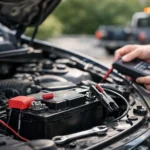

A five-minute look under the hood can catch the kind of problem that turns a normal commute into an overheated engine, a weak brake pedal, or an expensive tow. This vehicle fluid inspection guide helps you check the fluids most closely tied to everyday reliability, without treating your driveway like a professional repair bay.
You do not need to inspect every reservoir weekly. What matters is building a simple habit: check key fluids at regular intervals, learn what looks normal for your vehicle, and act early when a level drops, a color changes dramatically, or fresh spots appear where you park.
Before You Start Your Vehicle Fluid Inspection
Park on level ground, set the parking brake, and keep paper towels or clean shop rags nearby. Your owner’s manual is the final word on fluid specifications, service intervals, and the location of under-hood components. Reservoir placement and acceptable fluid types can vary widely, even between different model years of the same vehicle.
For a basic visual check, a cool engine is safest. This is especially true for coolant. Never remove a radiator cap or coolant reservoir cap when the engine is hot. A pressurized cooling system can release scalding fluid without warning.
It also helps to look beneath the vehicle before moving it. Clear water is usually air-conditioner condensation. Oily, colored, or sweet-smelling puddles deserve attention. Put a clean piece of cardboard under the suspected area overnight if you need a clearer picture of where a drip is coming from.
Engine Oil: Check Level and Condition
Engine oil is the fluid most owners should watch closely. It lubricates moving parts, helps manage heat, and carries contaminants toward the oil filter. Low oil can cause accelerated wear long before a warning light appears.
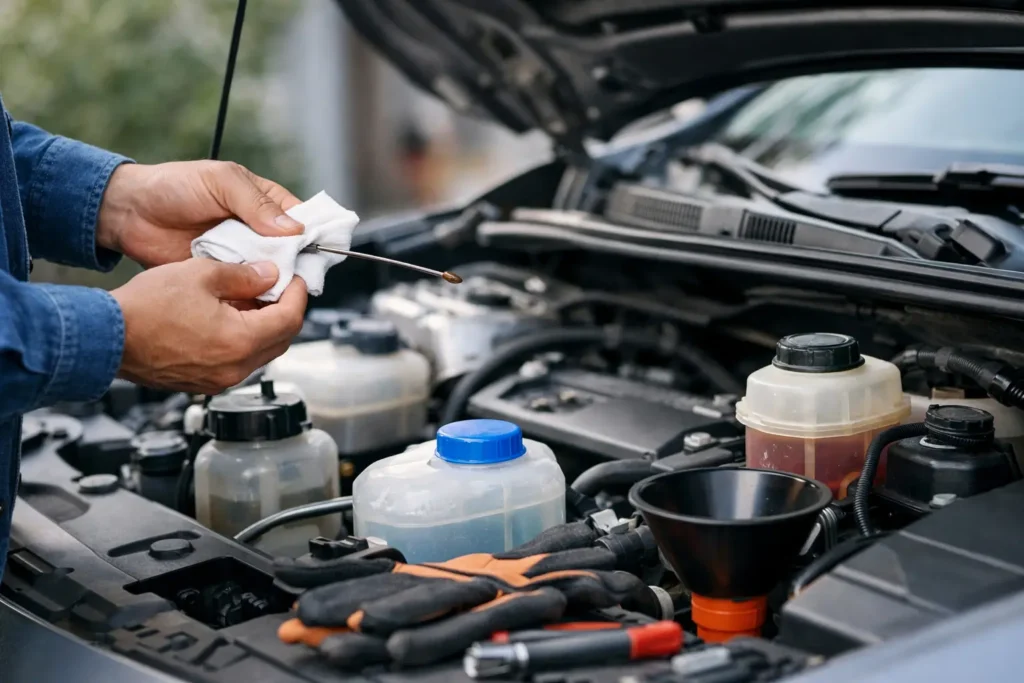
For the most consistent reading, follow your manual. Many vehicles are checked after the engine has been shut off for several minutes on level ground. Pull the dipstick, wipe it clean, insert it fully, then pull it again to read the level. The oil should sit between the low and full marks.
If it is near or below the low mark, add oil in small amounts using the viscosity and specification listed in the manual. Do not fill it to the brim just because the dipstick has a full mark. Overfilling can create its own problems, including foaming and excess pressure.
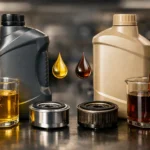
Fresh oil is often amber, but color alone does not tell you whether it needs changing. Oil naturally darkens as it does its job. More useful warning signs include a gritty texture, a strong burnt smell, or a milky, tan appearance that may indicate moisture or coolant contamination. If the level keeps falling between oil changes, investigate for a leak or excessive oil consumption rather than simply topping it off forever.
A note on oil-change intervals
Mileage is only part of the decision. Short trips, heavy traffic, towing, extreme temperatures, and long idling can be harder on oil than steady highway driving. Use the manufacturer’s maintenance schedule and oil-life monitor, but check the level manually between services, particularly on an older vehicle.
Coolant: Protect the Engine From Heat and Freeze Damage
Coolant, also called antifreeze, moves heat away from the engine and protects the cooling system from freezing and corrosion. Check the translucent overflow reservoir with the engine cold. Most tanks have low and full marks molded into the plastic.
A level slightly below the full line is not always a problem, especially after temperature changes. A reservoir that repeatedly drops below the low line is different. Look for damp hoses, crusty residue around clamps, a sweet smell, or coolant stains around the water pump and radiator area.
Coolant comes in several formulas and colors. Green, orange, pink, blue, and yellow are not reliable identifiers on their own. Mixing incompatible types can reduce corrosion protection or create deposits, so use the exact coolant specified for your vehicle. If you only need a small emergency top-off and the correct premixed coolant is unavailable, distilled water may be acceptable temporarily in some situations, but it should not replace the proper mixture for long-term use.
Brake Fluid: Small Reservoir, Major Safety Role
Brake fluid transfers the force from your brake pedal to the braking system. The reservoir is usually mounted near the back of the engine bay on the driver’s side, often on top of the brake master cylinder. You can normally check the level through the side of the reservoir without opening it.
The fluid should be between the minimum and maximum lines. A gradual drop can happen as brake pads wear, because more fluid remains in the brake calipers. Still, a low level can also point to a leak or severely worn pads. If the brake warning light comes on, the pedal feels soft, or the level drops quickly, do not treat it as a simple top-off task. Have the braking system inspected promptly.
Brake fluid absorbs moisture over time, which lowers its boiling point and can contribute to internal corrosion. It is commonly clear to light amber when fresh and may darken as it ages. Follow the recommended replacement interval, even if the brakes seem to work normally. Also keep brake fluid off paint. It can damage the finish quickly, so wipe spills immediately with plenty of water.
Transmission Fluid: Check the Right Way or Leave It Alone
Transmission fluid lubricates, cools, and helps operate many automatic transmissions. Older vehicles may have a dipstick, but many newer cars use sealed transmissions with no owner-accessible dipstick. That does not mean the fluid lasts forever. It means the level check may require a specific temperature, a level lift, and a professional scan tool.
If your vehicle has a transmission dipstick, the manual may instruct you to check it with the engine warm and running, after shifting through the gears. Use that procedure exactly. A reading taken under the wrong conditions can be misleading.
Healthy automatic transmission fluid is often red or reddish brown, though specifications differ. A burnt smell, very dark fluid, delayed shifts, slipping, or new shuddering should be diagnosed. Avoid adding universal transmission fluid unless the label clearly meets your vehicle’s required specification. The wrong fluid can cause poor shifting and expensive damage.
Power Steering, Differential, and Transfer Case Fluids
Some vehicles have electric power steering and no power steering fluid at all. If yours has a hydraulic system, the reservoir may have hot and cold marks. Check it for an appropriate level and look for wetness around hoses, the steering rack, or the pump. Whining while turning can be a symptom, but it is not proof, of low fluid.
Differential and transfer case fluids are usually not routine driveway checks because their fill plugs are underneath the vehicle and may require safely raising and leveling it. These fluids still matter, especially for trucks, all-wheel-drive vehicles, and vehicles used for towing. Follow the service schedule closely, and shorten the interval if your manual recommends it for severe use.
Windshield Washer Fluid Is Worth Checking Too
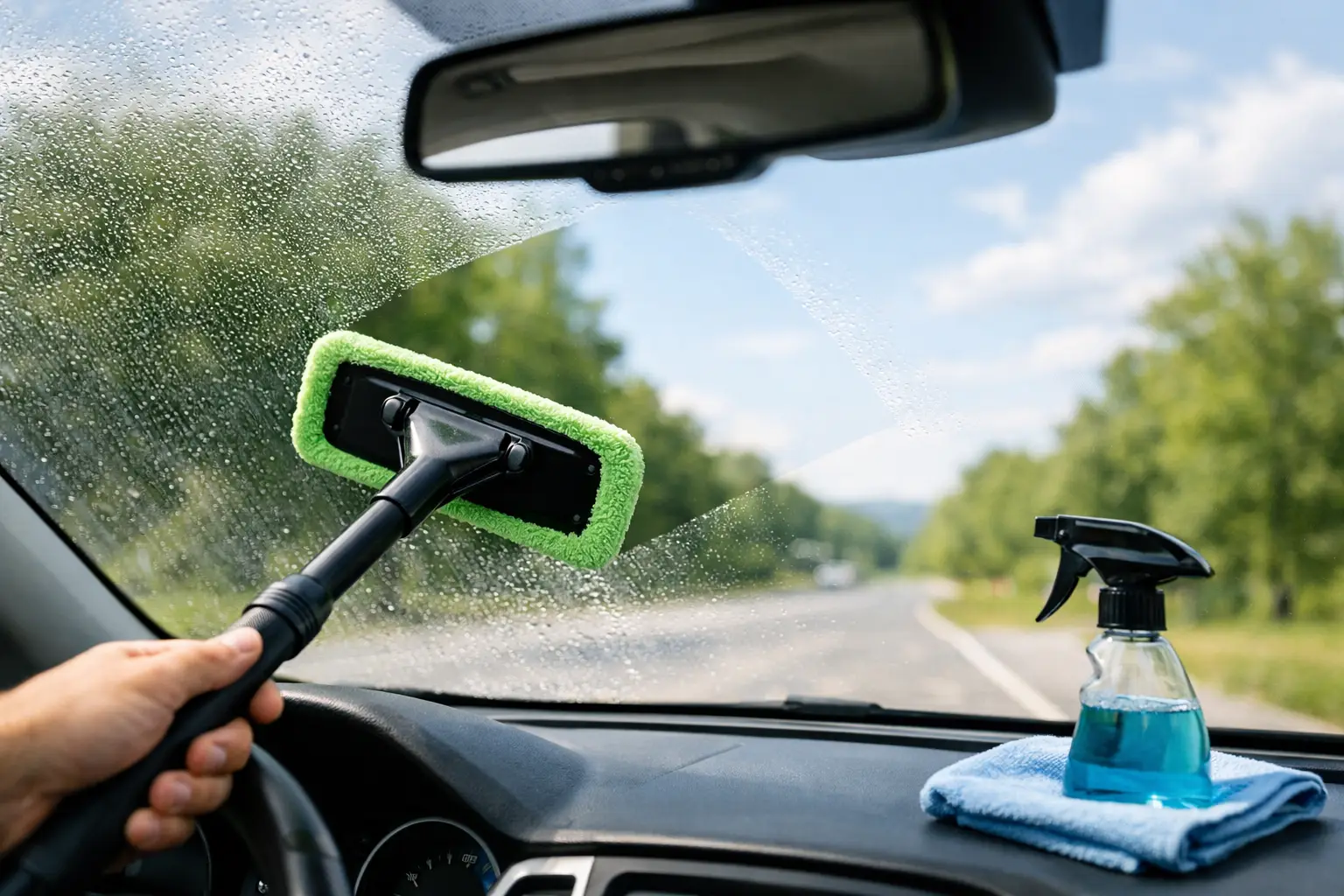
Washer fluid will not damage the engine if it runs low, but it affects visibility when you need it most. Check the reservoir before a road trip or winter weather. Use a washer fluid rated for the temperatures you expect, rather than plain water, which can freeze and may not remove road grime effectively.
This is also a good moment to test the washers and wipers. If the spray pattern is weak, clear clogged nozzle openings carefully and inspect for cracked hoses. Replacing worn wiper blades is inexpensive compared with the risk of driving through rain, salt spray, or bug residue with poor visibility.
Know When a Fluid Check Becomes a Repair
A fluid level that stays stable after a proper top-off is usually a maintenance item. A fluid level that keeps dropping is evidence of a leak, consumption issue, or mechanical fault. Record the date, mileage, fluid level, and anything unusual you see. That small note makes it easier to spot a pattern and gives a repair shop useful information if you need help.
Do not ignore a low oil-pressure light, an overheating warning, a brake warning light, steam from under the hood, or a large fresh leak. Pull over safely and address those conditions before continuing to drive. A few minutes of caution can prevent damage that no bottle of fluid can fix.
Make fluid checks part of a regular car-care routine, perhaps once a month and before longer trips. The goal is not to become your own mechanic overnight. It is to recognize your vehicle’s normal condition well enough to notice when it asks for attention.