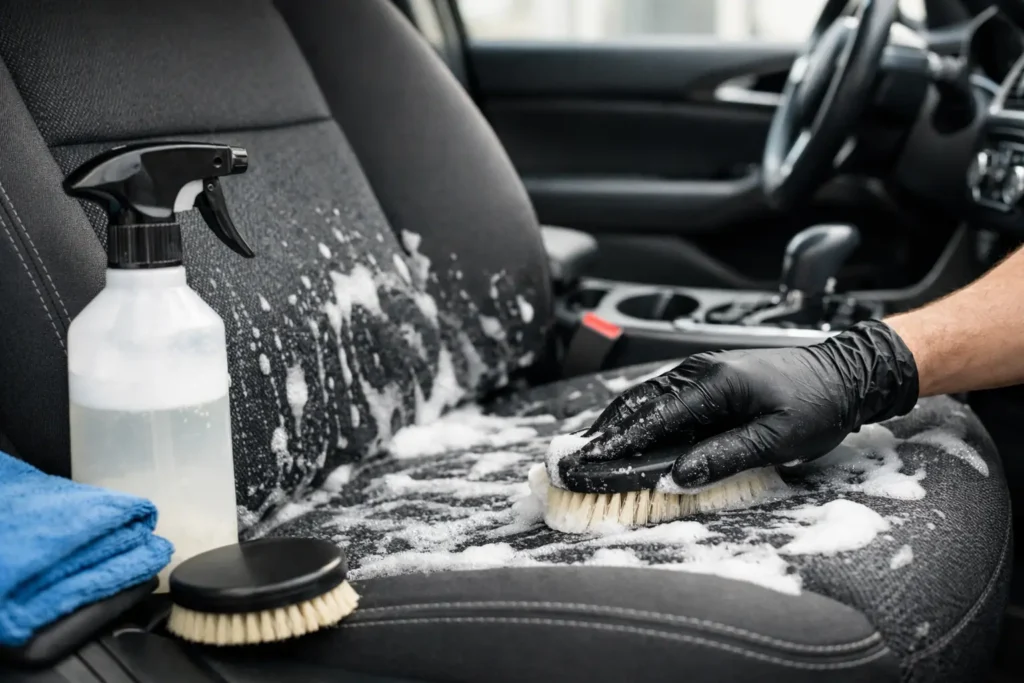

A coffee spill on a fabric seat, salt dragged onto the carpet, and a faint odor that returns after every warm afternoon all point to the same question: what is car interior shampoo, and is it the right product for the job? For most car owners, interior shampoo is a deeper-cleaning solution made for fabric surfaces. Used correctly, it can lift embedded soil that a quick vacuum or interior wipe leaves behind.
It is not a cure-all, though. Using shampoo on leather, saturating a headliner, or skipping the drying step can create more work than it saves. Knowing where it belongs is the difference between a fresher cabin and water spots, lingering odors, or damaged trim.
What Is Car Interior Shampoo?
Car interior shampoo is a cleaning product formulated to break down dirt, body oils, food residue, spills, and stains in automotive carpeting and cloth upholstery. It usually contains surfactants, which loosen grime so it can be removed with a microfiber towel, brush, wet-dry vacuum, or carpet extractor.
The word “shampoo” can mean slightly different things depending on the product. Some formulas are concentrated liquids that need to be diluted with water. Others come ready to use in a spray bottle, while foaming versions are designed to sit on the surface briefly before being agitated and wiped away. A product may be sold as upholstery shampoo, carpet shampoo, fabric cleaner, or interior cleaner, but the instructions matter more than the name on the label.
Unlike a general-purpose dashboard cleaner, interior shampoo is intended for absorbent materials. Its job is to clean below the visible surface rather than simply wipe away dust. That makes it useful for neglected cloth seats, floor mats, carpets, and fabric cargo areas.
What Car Interior Shampoo Cleans Best
Interior shampoo works best on synthetic automotive fabrics, which are common in cloth seats and carpeting. These materials collect fine dust, skin oils, pet hair, road salt, and residues from drinks or snacks over time. Vacuuming removes loose debris, but it cannot pull out all of the grime trapped among the fibers.
A shampoo treatment can improve the appearance and feel of several areas, including cloth seats, removable carpeted floor mats, carpeted footwells, fabric door inserts, and trunk carpeting. It can also help reduce odors when the odor source is dirt or a light spill in the fabric.
That last point is worth keeping in mind. Shampoo may freshen a musty-smelling carpet, but it will not solve an active water leak, mold growth, a soaked seat cushion, or a mechanical odor entering through the ventilation system. If the odor returns quickly, look for the source before repeatedly adding cleaning products.
Shampoo is not the same as an odor eliminator
Many interior shampoos include a fragrance, and some contain mild odor-control ingredients. Fragrance can make a cabin smell cleaner, but it does not necessarily remove odor-causing material. For pet urine, milk, vomit, or other organic spills, an enzyme-based cleaner may be needed before or alongside shampoo.
Use the product that matches the problem. Shampoo handles general soil and many everyday stains. An enzyme cleaner targets organic residue. A dedicated spot remover may be better for ink, grease, or dye transfer. Trying to make one bottle handle every stain often leads to aggressive scrubbing and disappointing results.
Where You Should Not Use It
Car interior shampoo is not a universal interior cleaner. Avoid using it on leather, suede, Alcantara, unsealed wood, infotainment screens, gauges, and most hard plastic surfaces unless the label specifically says it is safe. These materials require products designed for their finish and cleaning needs.
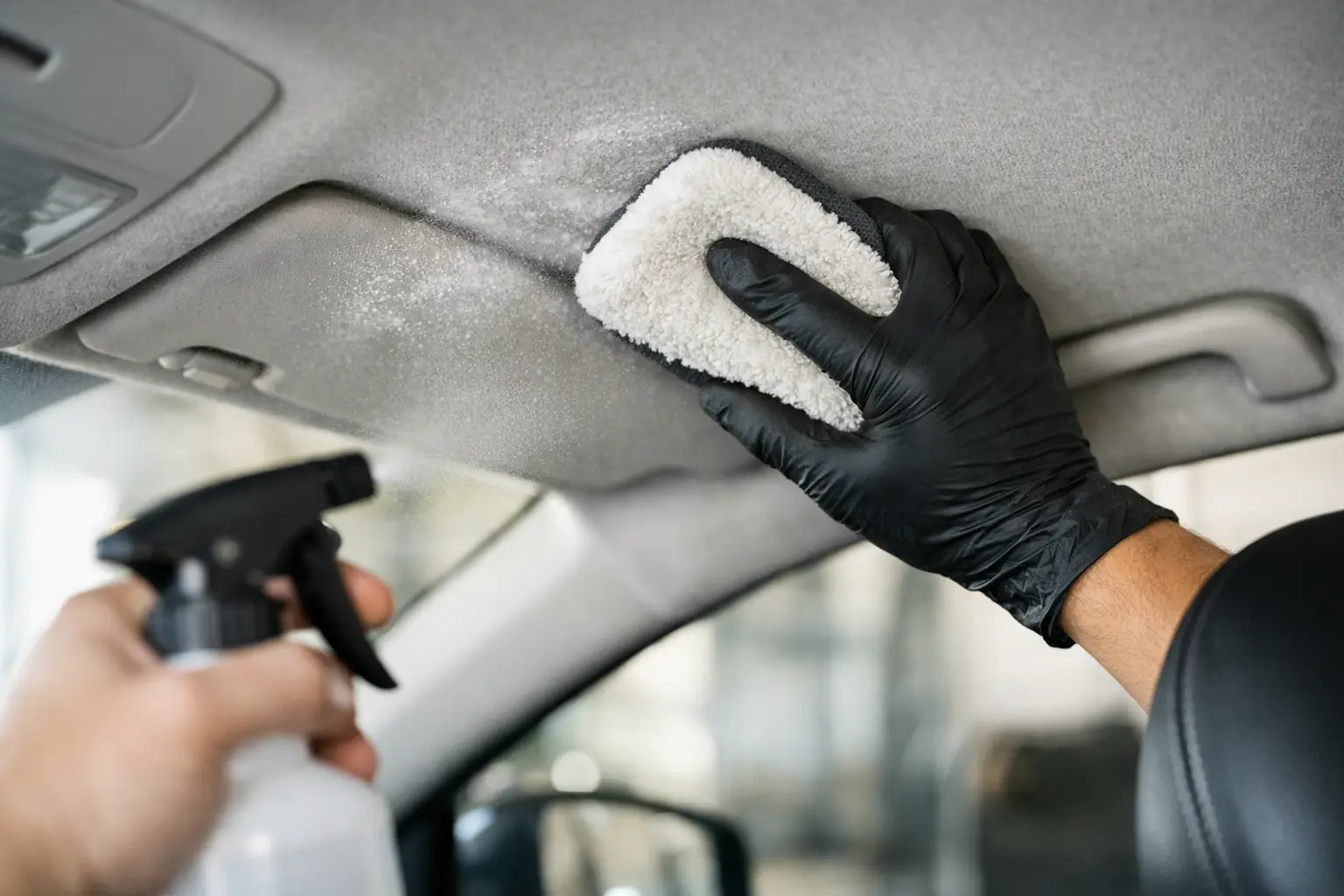
Be especially careful around the headliner. The fabric on a vehicle ceiling is typically attached with adhesive, and too much moisture can cause it to sag or separate. If the headliner has a small stain, use a lightly damp microfiber towel and a suitable upholstery cleaner sparingly. Do not spray shampoo overhead or scrub the area hard.
Also use caution on seats with built-in heating, ventilation, occupancy sensors, or complex stitching. The surface fabric can usually be cleaned, but soaking the seat is never a good idea. Moisture should stay at the surface and be removed promptly.
How Car Interior Shampoo Works
Shampoo works by combining chemical cleaning with light agitation. The cleaning solution loosens soil from the fibers, while a soft brush or towel helps separate the soil from the material. The final step is just as important: the loosened dirt and leftover solution need to be lifted away.
This is why professional detailers often use an extractor. The machine sprays a controlled amount of solution and then vacuums moisture and debris from the fabric. At home, you can still get good results without one. A spray bottle, soft upholstery brush, clean microfiber towels, and a wet-dry vacuum can handle many routine jobs.
More product does not equal better cleaning. Overapplying shampoo leaves residue that can make fabric feel stiff, attract new dirt, or create streaks after drying. A lightly damp surface is easier to clean and much easier to dry than a saturated one.
How to Use Car Interior Shampoo Safely
Start by checking the product label for dilution instructions and material compatibility. Then test it in an inconspicuous spot, such as under the front edge of a seat or in a corner of the cargo area. Wait until the test area dries before treating a larger section. This small step can reveal color transfer, fading, or unwanted texture changes.
Vacuum the area thoroughly before adding any cleaner. Grit and crumbs can turn into abrasive sludge when wet, and loose debris prevents the shampoo from reaching the actual fabric. Move the seats if possible and use a crevice tool along seams and rails.
Apply the shampoo lightly, either to the fabric or to a brush or microfiber towel, based on the label directions. Work in small sections rather than trying to clean the whole seat or carpet at once. Agitate gently with a soft brush, especially on carpet and durable cloth upholstery. For delicate fabrics, use a microfiber towel instead of a brush.
After a short dwell time, blot or wipe away the loosened soil with a clean, dry microfiber towel. If you have a wet-dry vacuum or extractor, use it to remove as much moisture as possible. Repeat only where needed, not automatically across the entire surface.
Finally, let the vehicle air out with doors or windows open in a dry, well-ventilated space. Run fans if necessary. The interior should be fully dry before floor mats are replaced or the vehicle is closed up overnight. Damp carpet is a common reason a freshly cleaned vehicle develops a sour smell a day later.
Choosing Between Foam, Spray, and Extractor Shampoo
The best type depends on the condition of the interior and the tools you have. Foam shampoos are convenient for small spots because they tend to use less liquid. They are a practical choice for a coffee drip on a seat or a dirty patch on a floor mat.
Ready-to-use sprays are easy for routine cleaning and light soil. They are beginner-friendly, but it is still possible to overapply them. Concentrated shampoos are often more economical for larger jobs, especially if you own a carpet extractor, but they require accurate mixing. A solution that is too strong can leave residue or be harder to rinse from fabric.
For heavily soiled vehicles, extraction delivers the deepest result because it removes dirty water instead of relying only on towels. Still, an extractor is not always necessary. If your seats are only lightly dirty and you clean them regularly, a low-moisture shampoo method may be safer and more than adequate.
Common Mistakes That Leave Interiors Looking Worse
The most common mistake is soaking the fabric. Water can move stains deeper into seat foam, extend drying time, and encourage mildew if the cabin stays closed. Use controlled amounts of product and extract or blot thoroughly.
Another mistake is scrubbing every stain with a stiff brush. Hard brushing can fuzz upholstery, damage fabric fibers, and spread a stain outward. Start gently, work from the outside of the stain toward the center, and increase effort only if the material can handle it.
Skipping a final wipe or extraction is another problem. If shampoo residue remains, it can leave a crunchy feel or attract dirt more quickly. Use clean towels, not the same dirty towel that removed the first pass of grime.
Finally, do not judge the result while the fabric is wet. Damp fabric often looks darker, and a stain may appear to be gone until the material dries. Check the area after it has fully dried before deciding whether a second treatment is necessary.
How Often Should You Shampoo a Car Interior?
For a typical daily driver, a full fabric shampoo once or twice a year is usually enough. Spot-clean spills as they happen, vacuum regularly, and clean floor mats more often during winter or rainy seasons. Families with young children, pets, or frequent passengers may need deeper cleaning more often.
Overcleaning is not usually as harmful as neglect, but repeated wet cleaning can wear fabric faster if it involves harsh chemicals or heavy brushing. A consistent maintenance routine keeps the job manageable: vacuum first, treat spills early, and reserve shampoo for the dirt that has settled in.
A clean interior is more than a cosmetic upgrade. It makes commuting more comfortable, helps protect resale value, and gives you a better chance of catching leaks or wear before they become expensive problems. Use car interior shampoo with a light hand, let the cabin dry completely, and your vehicle will look cared for rather than simply perfumed.